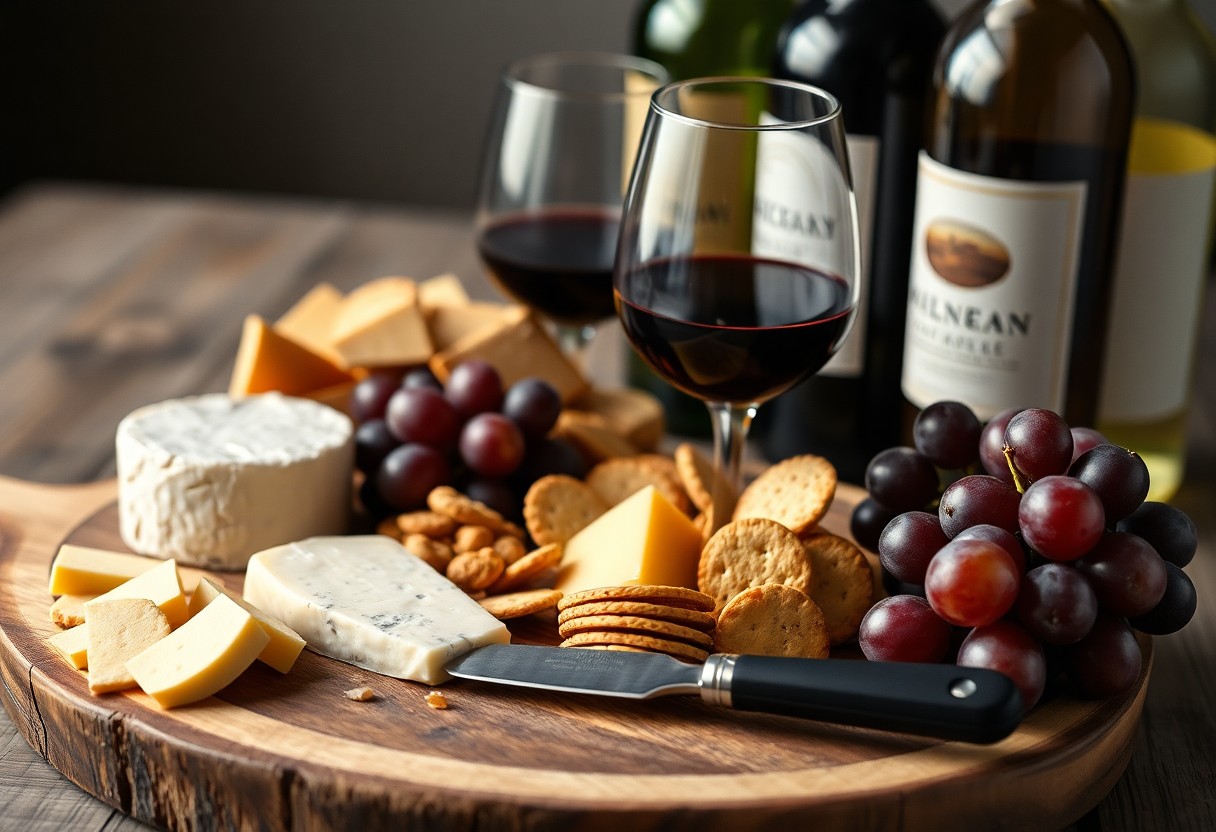
Most times you should match cheese and wine by intensity: pair light cheeses with crisp whites and softer reds, and avoid letting pungent blues overpower delicate wines. Trust your palate, sample small bites, and adjust to balance flavor and texture.
Key Takeaways:
- Match wine intensity to cheese intensity: light, unoaked whites or rosés with mild cheeses and plain crackers; medium-bodied whites or light reds with semi-soft cheeses; full-bodied reds with aged hard cheeses.
- Use acidity and bubbles to cut richness: sparkling wines or high-acid whites balance creamy, buttery cheeses while crisp rosés or Sauvignon Blanc complement salty cheeses and plain crackers.
- Employ contrast for memorable pairings: sweet wines pair with blue cheeses and tannic reds pair with nutty aged cheeses; keep crackers neutral to let wine and cheese shine.
Identifying Key Flavor Factors
Sense how wine and cheese interact by noting acidity, fat, salt and sweetness. Use a quick checklist:
- Acidity vs. fat
- Salt vs. sweetness
- Texture and body
This helps you pick balanced pairings.
Balancing Acidity and Fat Content
Match the acidity of your wine to the fat in the cheese; higher fat tames acid, while brighter acid cuts creamy richness so you avoid one note dominating the plate.
Coordinating Intensity and Body
Pair lighter cheese with delicate wine; match stronger cheeses to fuller body and higher intensity so flavors remain balanced rather than clashing.
Explore how texture influences perception: firmer, aged cheeses amplify intensity, while soft, creamy cheeses emphasize body; consider how you want the pairing to finish and choose a wine that complements that arc.
Selecting the Ideal Cheese Foundation
Choose a cheese base that balances flavor and texture: mild cow or tangy goat plus one firm option. For more inspiration, check Wine pairings for cheese and crackers boards. Be mindful that high-fat cheeses match acidic wines to cut richness.
Soft Cheeses and Fresh Profiles
Try soft cheeses like chèvre or burrata when you want bright, fresh pairings; you should match them with crisp whites or light reds. Expect zesty acidity to lift the creaminess and keep your board lively.
Hard Cheeses and Nutty Undertones
Aged hard cheeses offer concentrated nuttiness and salt; pair them with medium-bodied reds or full whites so you don’t overpower complex flavors. You can cut tighter textures with slices of crunchy crackers.
Beyond texture, you should consider aging, salt level and fat: long-aged cheddars and Parmigiano develop nutty, crystalline bites that pair well with sturdy reds or sherry. Watch that high-sodium cheeses can amplify tannins and alcohol, so temper each sip with a crisp cracker or slightly sweet wine to balance.
Choosing the Perfect Cracker Texture
Texture guides your choice: thin, crisp crackers amplify delicate cheeses, while dense, grainy crackers stand up to aged, robust varieties; avoid overly sweet or spiced crackers that can clash with subtle wines.
Classic Water Crackers for Neutrality
Water crackers provide a neutral base so you can taste cheese nuances; pair them with delicate whites or light reds and let the cheese-not the cracker-lead.
Artisanal Seeded and Herbed Varieties
Seeded and herbed crackers bring texture and savory notes; you should match them to bold cheeses and bolder wines, and avoid overpowering delicate goat or fresh cheeses.
Experiment with seeds-sesame, flax, sunflower-for nutty crunch that pairs well with aged cheddars and Manchego; herbs like thyme or chive suit creamy cheeses. Be cautious: strong spices or sugary glazes will clash with subtle wines, while savory seeds enhance robust reds and barrel-aged whites.
Pro Tips for Enhancing the Tasting Experience
Try pairing small portions so you can compare textures and flavors; notice how wine, cheese and crackers interact on your palate. Keep plain crackers and water to reset between samples. The focused comparisons reveal subtle matches and mismatches.
- Cheese progression: mild to strong
- Cleanse with plain crackers or water
- Note wine acidity and sweetness
Serving Temperatures and Glassware
Serve whites chilled (45-55°F) and reds slightly cool (55-65°F) so you detect aromas; choose tulip-shaped glassware that concentrates scent and lets the wine breathe. Bring soft cheese nearer room temperature for truer texture and flavor.
Serving Temperatures & Glassware
| Type | Tip |
| Light white | 45-50°F – narrow glass to preserve aromatics |
| Full-bodied red | 55-65°F – wider bowl to open aromas |
| Sparkling | 40-45°F – flute to retain bubbles |
Incorporating Simple Accoutrements
Add honey, nuts, or fruit sparingly to explore contrasts; avoid over-salting as it can overpower wine or delicate cheese. Offer plain crackers to reset the palate between pairings.
Consider grouping accoutrements by flavor: pair honey or preserves with salty, aged cheese, and tart fruit with creamy varieties; crunchy nuts add texture against smooth crackers. Keep portions small so the accompaniments highlight, not mask, the wine and cheese profiles.
Troubleshooting Common Pairing Pitfalls
Troubleshooting mismatches is straightforward: dial back extremes-choose milder cheeses or a different wine. If tannins clash with salt, pick lower-tannin reds or sparkling wines. When sweetness dominates, switch to drier styles. Test small bites before you commit.
Managing High Salt and Tannin Clashes
Avoid pairing salty aged cheeses with young, high-tannin reds; you’ll get harsh bitterness. Choose low-tannin reds, off-dry whites, or sparkling, whose acidity and bubbles tame salt and soften tannins. Sip between bites to confirm your choice.
Preventing Flavor Overload
Balance strong cheeses with simple wines so neither dominates your palate. Use plain crackers or small portions to keep flavors distinct. If crowding appears, pick a neutral wine or single-flavor cheese to let each element shine and avoid palate fatigue.
Taste each cheese and cracker alone, then together so you spot what risks being overpowered. If textures clash, swap a crunchy option for a neutral water cracker or choose a creamier cheese. Keep condiments minimal-intense honey or bold spreads can quickly steal the show-so select one supporting accent per pairing.
Summing up
Drawing together, you pair mild cheeses and buttery crackers with a light Chardonnay, aged cheddar with a bold Cabernet, tangy goat cheese with a crisp Sauvignon Blanc, and creamy blue cheese with a sweet dessert wine; balance textures and salt to highlight flavors.
FAQ
Q: How do I choose a wine for simple cheese and crackers?
A: Start by matching intensity and texture: light, fresh cheeses pair with light-bodied whites or sparkling wines, while aged, firm cheeses suit medium- to full-bodied reds. Look for acidity in the wine to cut through rich, fatty cheeses; sweetness can balance salty or pungent cheeses. Plain crackers act as neutral palate cleansers; flavored or buttery crackers require a wine with more body or pronounced fruit to avoid being overwhelmed.
Q: What are easy, reliable cheese-cracker-wine combinations?
A: Try these straightforward pairings: creamy Brie with Champagne or unoaked Chardonnay and plain water crackers; tangy goat cheese with Sauvignon Blanc and seeded crackers; aged cheddar with Cabernet Sauvignon or Zinfandel and whole-grain crackers; blue cheese with a sweet fortified wine (Port) or late-harvest Riesling and slightly sweet or buttery crackers; mild Swiss with Pinot Noir and simple butter crackers.
Q: Any practical serving and tasting tips for a casual cheese-and-cracker spread?
A: Serve whites chilled (45-55°F / 7-13°C) and reds slightly cooler than room temperature (55-65°F / 13-18°C). Slice or crumble cheeses into bite-sized portions and arrange from mildest to strongest so palates progress naturally. Offer plain crackers alongside one or two flavored options so guests can experiment without masking cheese flavors. Provide small pours (1-2 oz / 30-60 ml) per tasting and encourage trying the cheese alone, then together with the cracker and wine to notice how each element changes the experience.