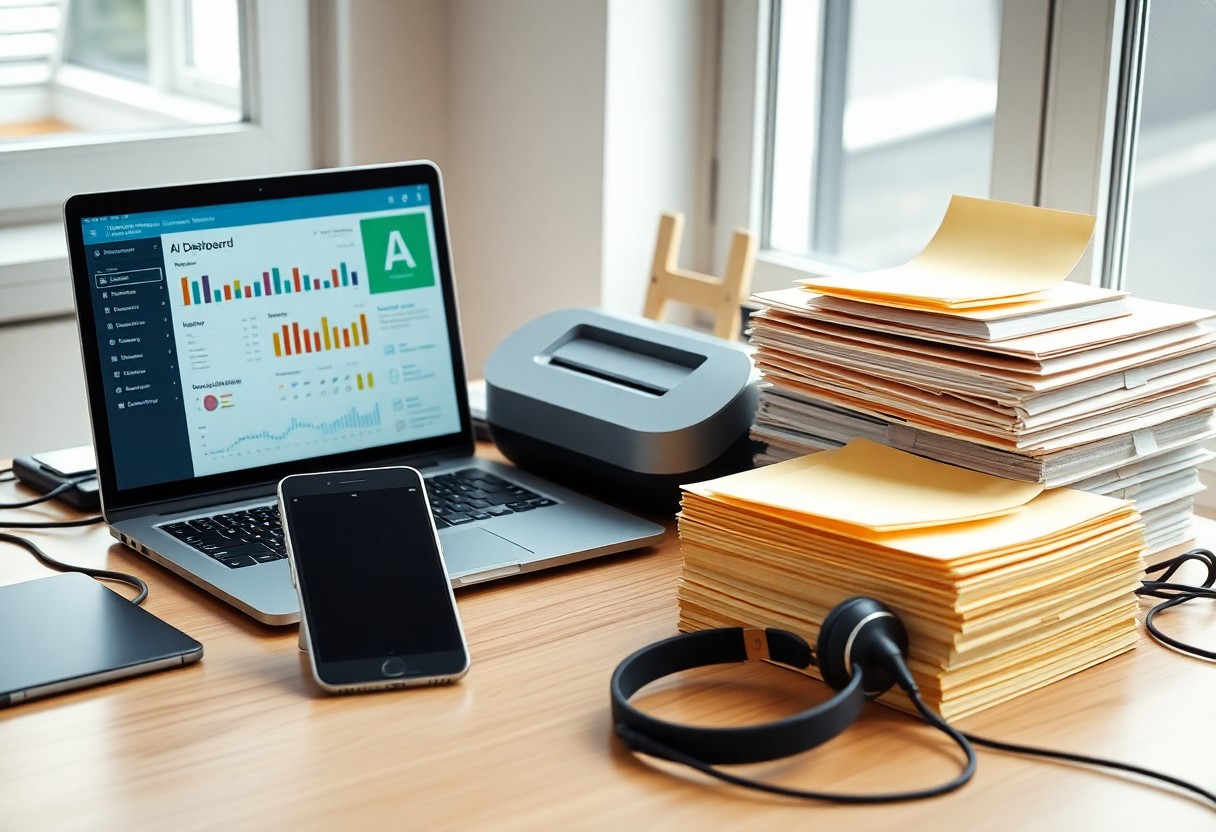
Many days, I feel overwhelmed by endless thoughts, tasks, and distractions-but I’ve found that AI can clear mental clutter fast. I use simple tools to organize your ideas, prioritize your time, and protect your focus. With the right approach, you gain mental space and peace-and I’ll show you how.
Key Takeaways:
- AI tools like smart note-taking apps and voice assistants help capture thoughts instantly, reducing the need to keep information mentally on hold.
- Automating routine tasks-such as scheduling, email sorting, and reminders-frees up mental space and minimizes decision fatigue throughout the day.
- Regular use of AI-powered organization systems trains the brain to rely less on internal memory, making it easier to focus on one task at a time without mental overload.
Identifying Your Mental Noise
I notice how often my thoughts spiral without warning. Your mind might feel heavy with unfinished tasks, worries, or endless to-do lists. Thoughts, emotions, and distractions pile up silently. Thou carry this weight without realizing its source-until you pause and ask, “What’s really on my mind?”
What counts as mental clutter?
Worries about tomorrow, replaying yesterday’s conversation, or stressing over unread emails-all of these count. Overthinking, rumination, and mental to-dos occupy space you could use for clarity. Thou deserve to free yourself from the noise that isn’t serving you.
Key factors that fill up your headspace
Daily decisions, unresolved emotions, and constant notifications slowly build pressure.
- Stress
- Fear of missing out
- Unfinished tasks
- Information overload
Thou can reclaim focus by naming what’s truly filling your thoughts.
Sometimes I don’t realize how much I’m holding until I see it written down. Small choices like what to eat or wear add up. Emotional weight from unresolved conflicts lingers quietly.
- Social media scrolling
- Perfectionism
- Unspoken expectations
- Sleep disruption
Thou are not broken-you’re simply carrying too much at once.
How-to Get Started with AI Assistants
I began by choosing a simple AI assistant that felt natural to use every day. You don’t need advanced features at first-just something that listens, responds, and helps you offload thoughts quickly. The best part is how effortlessly it turns chaos into clarity with just a few words.
Picking the perfect tool for your lifestyle
Your daily routine shapes what tool works best. I matched my habits to apps that fit my pace-whether it’s voice notes on walks or quick text entries between meetings. The right choice feels less like tech and more like a quiet helper who just gets you.Managing Your Tasks Effortlessly
I used to drown in sticky notes and half-finished lists until I let AI take the wheel. Now, your daily priorities sort themselves, freeing up mental space for what truly matters. With smart tools watching over your workload, staying on track feels natural-not forced.
Using AI to build the ultimate to-do list
I let AI turn my chaotic thoughts into a clear, prioritized list every morning. It learns what you tend to delay and gently nudges you toward action. The best part? It adjusts in real time as new tasks appear, so your list always feels accurate and surprisingly manageable.
Letting algorithms handle your complex scheduling
I stopped fighting my calendar the day I handed it over to AI. It finds hidden pockets of time and fits in what you’ve been putting off. You gain hours without lifting a finger-just show up when it tells you to.
What really changed for me was how the AI anticipates conflicts before they happen. If you have a late meeting, it reschedules your workout or reading time without asking, based on your habits. It protects your focus by avoiding back-to-back tasks and builds in breathing room you’d likely skip. Over time, I’ve noticed less stress and far fewer missed deadlines-all because I trust the system to guard my time better than I ever could.
Sorting Through Information Overload
I used to feel buried under endless articles, emails, and tabs until I discovered how AI helps filter what matters. Overcoming Mental Clutter with AI Tools isn’t just possible-it’s simple. Check out this story of how one person transformed their focus with smart tech.
Summarizing long reads to save your brain power
Reading a 20-page report feels less daunting when AI pulls out the key points in seconds. I let tools scan dense content so you don’t have to. You reclaim time and mental energy, focusing only on what truly matters-without missing critical insights hidden in the noise.
Organizing digital notes without the manual work
Tagging, sorting, and renaming folders used to eat up my evenings. Now, AI automatically groups my thoughts by topic, date, or project. You’ll find what you need instantly, and I no longer dread searching through messy note apps.
Letting AI handle my note organization changed how I work. It scans my handwritten scribbles, voice memos, and typed entries, then files them where they belong. I get a clean, searchable system without lifting a finger, and you can finally trust your digital notebook to keep up with your mind.
Pro Tips for a Calmer Mind
- AI tools help me filter noise so I can focus on what truly matters
- I use automated journaling to clear mental clutter before it builds up
- Using AI to clear mental clutter so you can do more thinking has changed how I approach daily stress
You don’t need perfect systems-just small, consistent steps that work for you. Thou
Setting up smart reminders that actually help
I schedule reminders based on context, not just time, so they feel helpful instead of annoying. When I tag tasks with location or mood, my AI suggests them at the right moment. This keeps my mind free of “don’t forget” loops.
Using voice AI for quick thought-dumping
Saying thoughts out loud feels more natural than typing, so I use voice AI to capture ideas as they come. It turns mental static into organized notes without breaking my flow. You’ll be surprised what your mind lets go of when you know it’s saved.
When I’m overwhelmed, I talk to my voice assistant like I’m dumping thoughts into a trusted notebook. It transcribes everything and even summarizes key points later. I don’t have to worry about structure-just speak freely. The relief is instant, and I often uncover insights I’d miss when writing.
Maintaining Your New Digital Clarity
I keep my digital space calm by reviewing what’s working and what’s not. You don’t need constant notifications or endless tabs to feel in control. Small, consistent habits make the biggest difference-like clearing your inbox weekly or scheduling AI check-ins. Clarity isn’t a one-time fix; it grows when you protect it daily.
Checking in on your AI habits regularly
I pause every few weeks to see how my AI tools are serving me. Are they reducing stress or adding noise? You might not notice slowly creeping dependency until you feel overwhelmed again. A quick reflection helps me adjust settings, mute unhelpful alerts, and reclaim focus before clutter returns.
Knowing when to unplug and go analog
I’ve learned that silence speaks louder than any notification. When your mind feels foggy or decisions get hard, stepping away from screens can spark real clarity. I use paper journals or walks without devices to reset. Sometimes, the best tool for mental space isn’t digital at all.
There’s real power in disconnecting on purpose. I schedule analog time like any important meeting-no apps, no AI, just thinking. This break often brings my best ideas, because your brain needs stillness to process. When you unplug, you’re not avoiding progress; you’re making room for deeper insight.
Conclusion
Now I see how AI can quietly tidy my thoughts. I use it to sort notes, set gentle reminders, and clear the noise so I can focus on what matters to you. With a little help from smart tools, your mind feels lighter, more at ease.
Leave a Reply