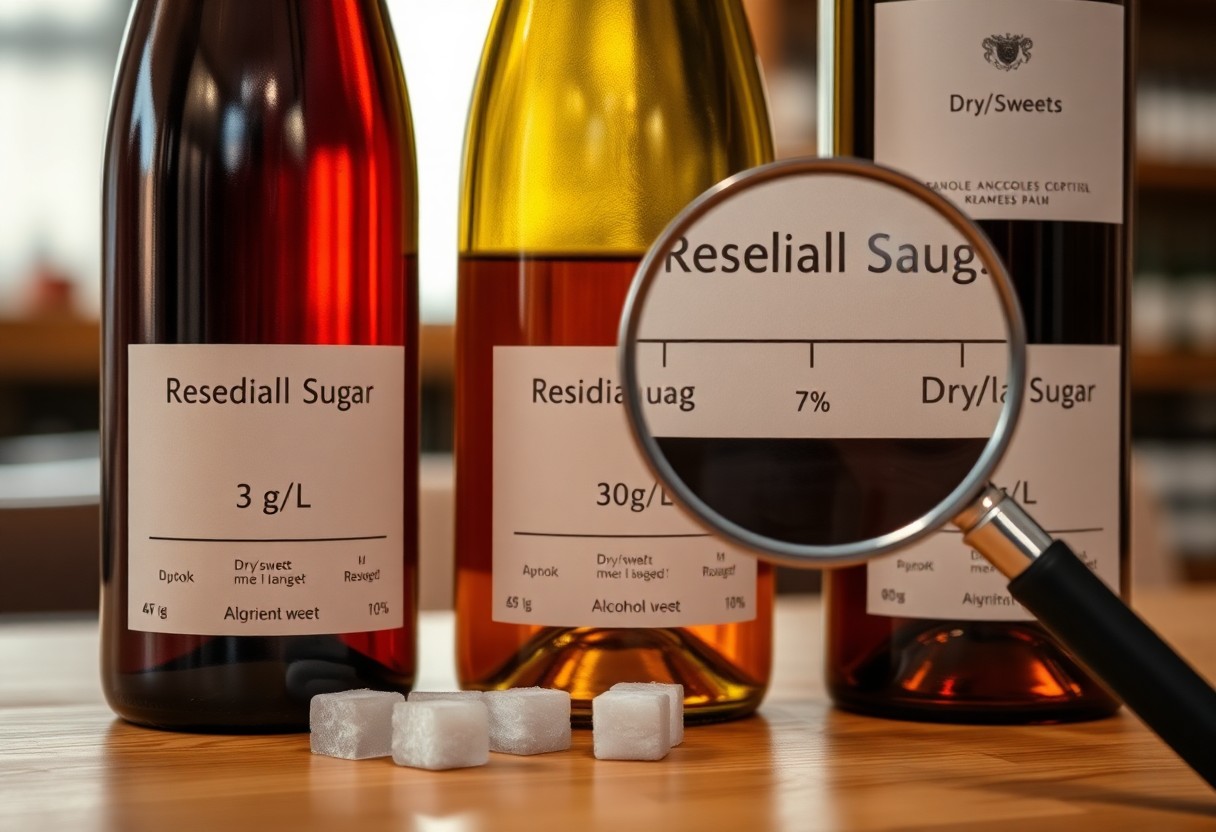
Wine labels, grape variety, and alcohol tell you much: you can check residual sugar, words like dolce or dessert signal sweetness, while trocken suggests dryness.
Key Takeaways:
- Grape variety and style: Varieties like Moscato, Riesling, Gewürztraminer and wines labeled late‑harvest, icewine or Sauternes are typically sweet; classic table varieties such as Cabernet Sauvignon, Merlot, Pinot Noir and many Sauvignon Blancs are usually dry.
- Label terms and regional clues: Words like “dry,” “off‑dry,” “semi‑sweet” or a listed residual sugar (g/L) are direct clues; German Prädikat (Kabinett, Spätlese, Auslese) and sparkling terms (Brut, Extra Dry, Demi‑Sec) also indicate sweetness level (Extra Dry is sweeter than Brut).
- Alcohol and acidity: Lower ABV often signals more residual sugar, higher ABV usually means dryer wine, and high acidity can mask sweetness so a wine may taste drier than its sugar content suggests.
How to Decode Specific Label Terminology
Labels often hide sweetness clues; when you scan for style words, regional rules, and any listed g/L residual sugar, you can predict dry versus sweet before opening. You should spot specific terms and numbers to set expectations for taste and pairing.
Interpreting European Terms Like ‘Trocken’ or ‘Demi-Sec’
European labels use concise words: if you see Trocken expect a dry profile, while Demi‑Sec signals noticeable sweetness. You should align those terms with the wine’s origin since countries set different sweetness thresholds that affect what you’ll taste.
Understanding Standardized Sweetness Scales
Scales and category names (RS values, Champagne terms like Brut or Demi‑Sec) give you measurable clues; you should look for g/L figures or recognized labels to estimate perceived sweetness before opening.
Reading residual sugar (RS) in grams per liter is the most reliable method: roughly 0-4 g/L feels bone‑dry, 4-12 g/L shows light off‑dryness, 12-45 g/L registers as medium sweet, and >45 g/L is clearly sweet. For sparkling wine, common categories are Brut Nature 0-3 g/L, Extra Brut 0-6, Brut up to 12, Extra Dry 12-17, Sec 17-32, and Demi‑Sec 32-50, so you can judge sweetness from the label without guessing.
Environmental Factors and Regional Influence
You can gauge regional cues like climate, soil and elevation to predict wine sweetness or dryness. Any cooler regions often yield higher acidity, while warmer zones produce riper grapes with more sugar.
- Climate: warmth vs. coolness
- Soil: drainage and heat retention
- Aspect: sun exposure
Comparing Warm Climate vs. Cool Climate Profiles
Warm vs Cool Climate Summary
| Warm Climate | Cool Climate |
|---|---|
| Sugar high, acidity lower | Sugar lower, acidity higher |
| Fuller body, ripe fruit | Lean body, tart fruit |
Warm regions push grapes to higher sugar, so you’ll often taste fuller, softer wines; cool regions preserve acidity and subtle fruit, making wines feel drier.
How Geography Affects Natural Ripeness
Elevation and aspect alter sun exposure, so you can estimate grape ripeness and likely sugar accumulation from vineyard siting and slope.
Soil depth, drainage and proximity to water shape daily temperature swings, which you can read as signals: fast-draining soils and steep, sun-facing slopes boost ripeness, while cold-air pockets and poor heat retention increase frost risk and reduce sugar, affecting perceived dryness or sweetness.
Tips for Recognizing Varietal Characteristics
- Riesling
- Moscato
- Gewürztraminer
- Sauvignon Blanc
- Cabernet Sauvignon
Spot varietal cues on the label and bottle shape to predict sweetness; check for residual sugar, grape names, and region. Knowing how grapes like Riesling or Muscadet behave helps you set expectations.
Identifying Naturally Aromatic and Sweet Grapes
Smell for pronounced floral and fruit notes; grapes such as Moscato, Gewürztraminer, and Riesling often indicate residual sweetness, lower perceived acidity, and a sweeter finish you can expect.
Selecting Grapes Known for Dry Finishes
Choose grapes famed for high acidity and tannin-Sauvignon Blanc, Pinot Noir, Cabernet Sauvignon-to favor dry wines; look for low residual sugar on technical sheets.
Examine vintage, region, and vinification: grapes from a warm climate tend to have more sugar, while cool climates retain high acidity that makes wines taste dry; you should check label terms like sec, trocken, or brut, and note that full fermentation and low residual sugar confirm a dry style.
Visual Cues and Bottle Shape Indicators
Observe the bottle shape and label: rounded, squat bottles or heavier glass often signal fortified or sweet wines; look through the glass for thicker legs and deeper color that tell you sweetness. For extra help, see How to know if a wine is sweet or not when it’s not on the …
How to Assess Viscosity and Color Through Glass
Tilt the glass or bottle slightly and watch how the wine runs back; slow-running legs suggest you’re likely facing higher sugar or alcohol; darker, amber tones often point to dessert styles.
Recognizing Distinctive Dessert Wine Packaging
Check labels for keywords like ‘Late Harvest’, ‘Icewine’ or ‘Sauternes’ and bottle size 375ml; these cues tell you the wine is likely a dessert wine.
Look for production words – ‘botrytized’, ‘passito’ or ‘vin de liqueur’ – and artisanal touches like wax seals or special foil; producers often use smaller bottles and detailed labels to signal sweetness, so you can gauge style before opening.
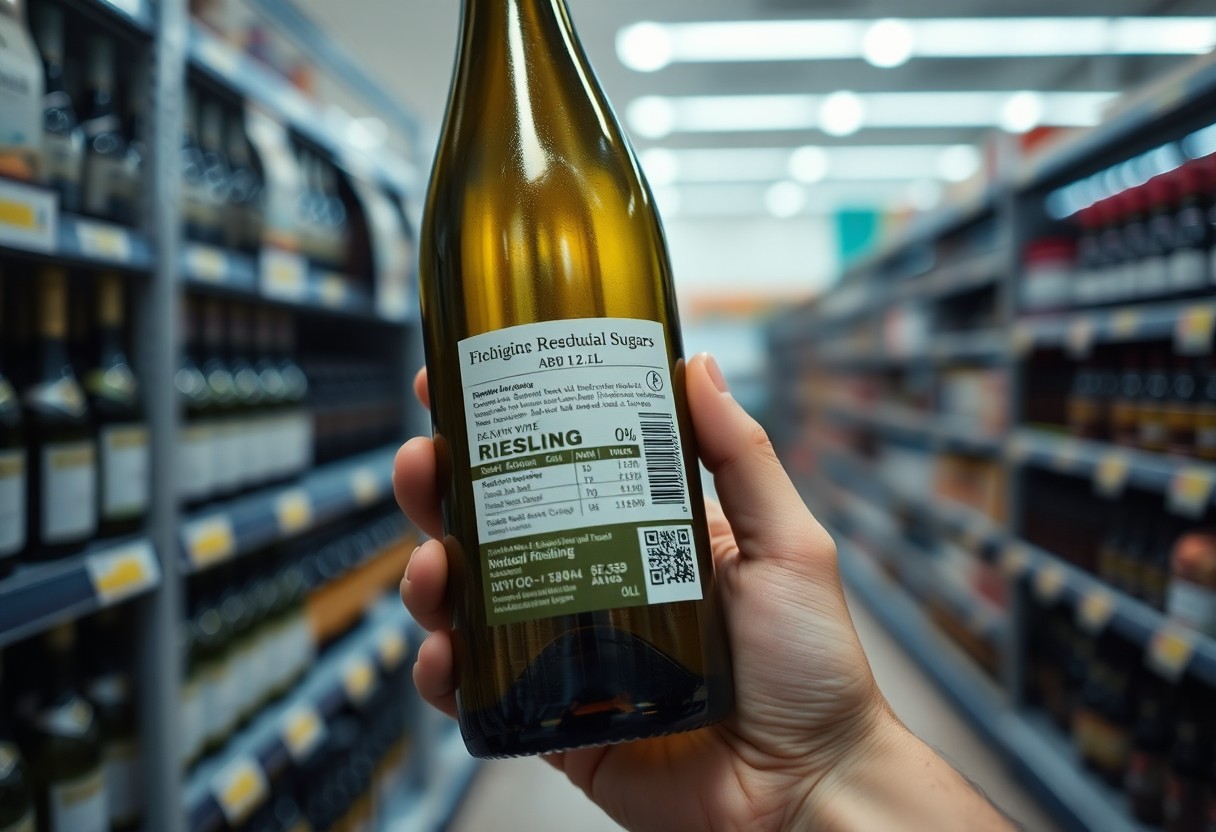
Expert Tips for Quick In-Store Research
Check labels for style clues: look for dry or sweet descriptors, grape variety and country norms; use quick cues:
- keywords like “off-dry”
- alcohol percentage-higher often means dry
- closure type can hint style
Any ambiguous label you should ask staff about or scan.
How to Use Mobile Apps for Profile Verification
Tap your phone to scan the label, compare tasting notes and ratings; apps often show residual sugar estimates or crowd verdicts indicating sweet versus dry, and you can save profiles to refine future picks.
Consulting Tech Sheets for Residual Sugar Data
Scan winery tech sheets or retailer pages for exact residual sugar numbers; low values signal dry, higher readings mean sweet, letting you decide before buying.
Review tech sheets for numeric residual sugar (g/L): under about 4 g/L is usually dry, roughly 4-12 g/L often reads as off‑dry, and higher values indicate sweet or dessert styles; check fermentation notes and any dosage to catch added sweetness before purchase.
Conclusion
With these considerations-grape variety, labeling cues, region, residual sugar indicators and ABV-you can predict a wine’s sweetness before opening, select bottles that suit your palate, and avoid surprises.
FAQ
Q: How can I tell from the label if a wine will be sweet or dry before opening it?
A: Labels often include terms or sweetness indicators you can use before opening a bottle. Look for explicit words such as “Dry”, “Sec”, “Secco”, “Trocken” or “Brut” to signal dry styles, and terms like “Demi-Sec”, “Off-Dry”, “Medium Sweet”, “Sweet”, “Doux” or “Dulce” to signal sweeter wines. German labels use Prädikat levels (Kabinett, Spätlese, Auslese, Beerenauslese, Trockenbeerenauslese) where higher levels usually indicate more residual sugar; a Riesling labeled “Trocken” is dry. Sparkling wines normally state sweetness on the label (Brut Nature/Zero Dosage, Extra Brut, Brut, Extra Dry, Sec, Demi-Sec), and the order is not intuitive: Extra Dry and Sec can be sweeter than Brut. Some labels list residual sugar in grams per liter (g/L); values under about 4 g/L are typically dry, 4-12 g/L lean off-dry to medium, and over 12 g/L tend toward sweet. Grape variety and region also give clues when labels omit sugar information: Moscato, late-harvest Riesling, Gewürztraminer and ice-wine styles are commonly sweet, while Sauvignon Blanc, Albariño, many Chardonnays and northern-hemisphere dry Rieslings are usually dry.
Q: Can color, alcohol percentage, or tannins tell me if a wine is dry?
A: Color is a poor indicator of sweetness; many sweet wines are pale and some dry wines are deeply colored. Tannins create a drying, astringent sensation on the palate but do not measure residual sugar; high tannin can mask perceived sweetness. Alcohol by volume (ABV) can mislead because a wine can be high in alcohol and still contain appreciable sugar, while some low-ABV wines are sweet. Reliable clues come from label terms, residual-sugar figures (g/L) and the wine’s grape and regional style rather than color, tannin level or ABV alone.
Q: What practical steps can I take at the store or restaurant to avoid buying a sweet wine if I prefer dry?
A: Ask staff or the sommelier specifically for wines labeled “dry”, “sec”, “secco” or “trocken” when you want a dry bottle. Read the back label or shelf tag for residual-sugar (g/L) or style notes and avoid words like “Demi-Sec”, “Moelleux”, “Doux”, “Late Harvest”, “Icewine”, “Botrytized” or German “Süß” if you want dry. Favor grape varieties and regions known for dry styles (Sauvignon Blanc, Albariño, many Chardonnays, Sancerre, Chianti, Rioja Reserva, northern-Rhine Rieslings). Use the producer’s website or a smartphone app to confirm tasting profiles for unfamiliar labels and check sparkling-wine sweetness levels on the label before purchasing.