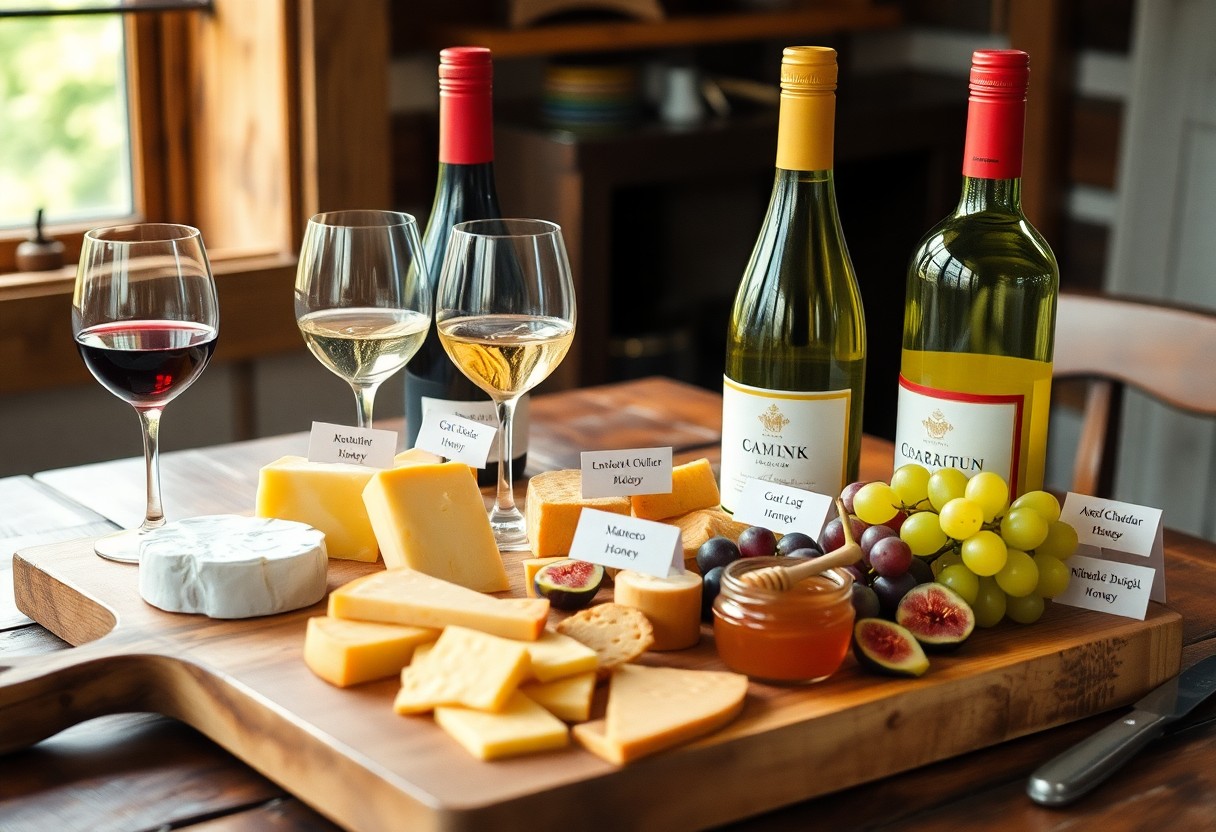
You pair cheese texture and flavor with wine intensity: match soft cheeses to sparkling or crisp whites, pair blue to sweet wines, and avoid high-tannin reds that overpower delicate cheeses.

Key Takeaways:
- Match intensity and texture: pair mild, fresh cheeses (chèvre, mozzarella) with light, acidic whites (Sauvignon Blanc, Pinot Grigio) and pair aged, nutty cheeses (Parmigiano, aged Gouda) with fuller-bodied reds (Cabernet, Syrah).
- Contrast and complement flavors: balance salty or funky cheeses (blue, Roquefort) with sweet wines (Sauternes, Port) and offset creamy, buttery cheeses with sparkling wines or unoaked Chardonnay.
- Use acidity and tannin strategically: high-acidity wines brighten tangy cheeses and refresh the palate, while tannic reds tame oily, aged cheeses; match wine and cheese from the same region as a reliable shortcut.

How to Match Wine with Specific Cheese Styles
Match cheese texture to wine: high-acidity whites lift creamy chevre, light-bodied reds suit mild Tomme, and fortified or sweet wines tame blue cheeses. Let your choices focus on acidity, tannin, and salt to guide reliable pairings.
Pairing Light Whites with Soft Varieties
Choose crisp, unoaked whites like Sauvignon Blanc or dry Riesling to cut through creamy textures; their bright acidity refreshes your palate and highlights delicate flavors without overwhelming.
Balancing Bold Reds with Aged Selections
Pair full-bodied, tannic reds with nutty, aged cheeses so the fat and salt soften tannins; seek cheeses with firm texture and savory depth to stand up to structure.
When you pair a structured Cabernet or Syrah with aged Parmesan, expect tannins to grip protein; choose cheeses with concentrated umami and salt to tame bitterness. Cut through heaviness with fruity, slightly sweet notes or a shorter oak; experiment with vintage gaps-older wine with older cheese often yields the smoothest marriage.
Pro Tips for a Successful Tasting
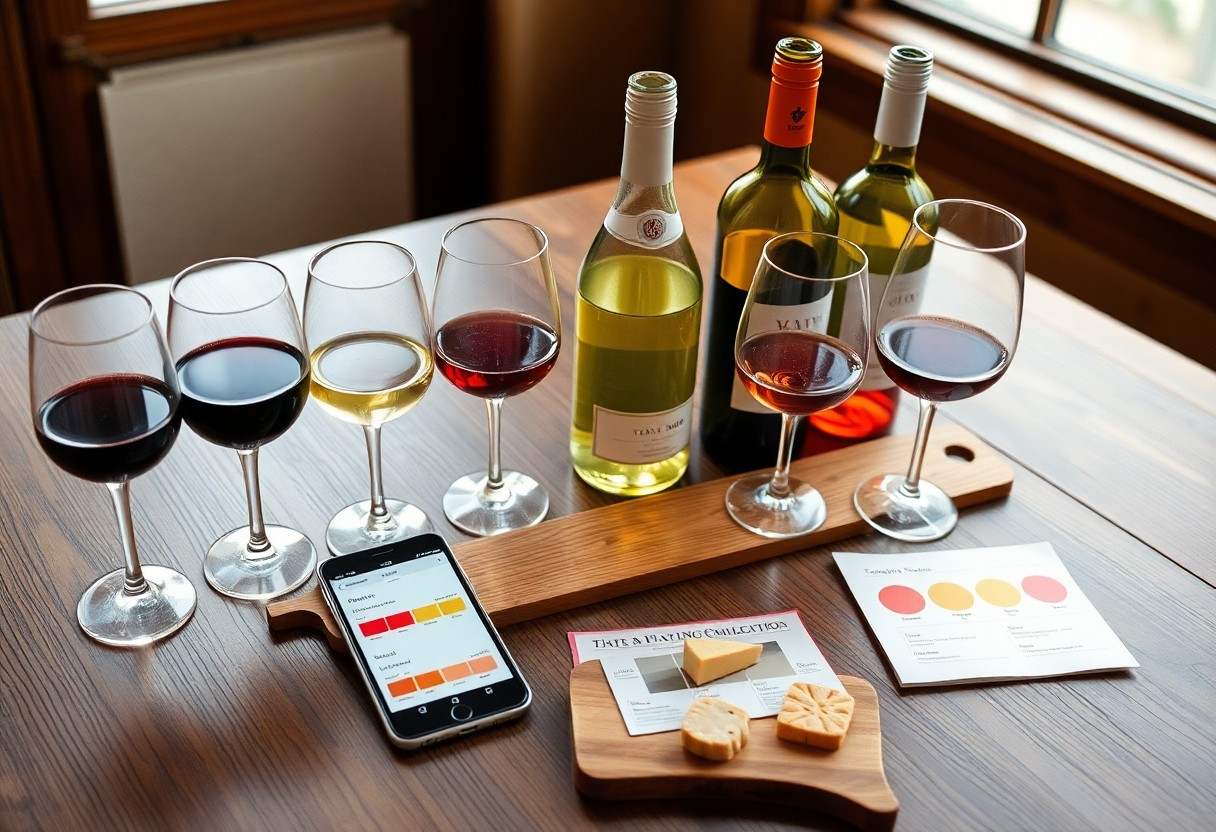
Practice tasting with small flights, cleanse your palate with water and neutral crackers, and note textures and acidity. Use wine and cheese contrasts to test pairings. Any tasting that ignores sequence will confuse your palate.
- wine
- cheese
- pairing
- temperature
- accompaniments
- tasting
Optimal Serving Temperatures and Sequence
Serve wines at proper temps and sip from lightest to boldest so you can compare subtle differences; chill whites, slightly cool rosés, and bring reds nearer room temperature. temperature controls aroma intensity.
Serving Temperatures & Sequence
| Cheese / Wine | Temp / Sequence |
|---|---|
| Fresh cheeses / Light whites | 45-50°F – taste first |
| Soft-ripened / Aromatic whites | 50-55°F – mid flight |
| Semi-hard / Rosé | 55-60°F – middle |
| Hard aged / Full reds | 60-65°F – last |
Selecting Complementary Accompaniments
Balance salty cheeses with sweet condiments, counter fatty textures with acid, and add crunch for contrast – these choices refine your pairing outcomes.
Consider pairing bold cheese with honey, fig jam, or toasted nuts to bridge savory and sweet; sharp varieties pair well with pickles or crisp apples, while creamy brie benefits from crusty bread. Avoid overpowering garlic-heavy sauces, and keep portions small so each wine resets your palate.
Regional and Terroir-Based Combinations
Regional pairings show how soil and climate shape cheese character, so you should match local wines and cheeses for reliable harmony; consult Wine and Cheese: Pairings Guide and Chart – Coravin EU and focus on acidity to cut rich cheeses.
The Influence of Geographic Origin
Climate and pasture influence milk flavor, so you can pair alpine, grassy cheeses with crisp whites and coastal, salty cheeses with brighter wines; watch the salt-acidity balance when you select a bottle.
Classic European Flavor Profiles
Old-world cheeses often match regional wines because you can mirror texture and tradition-think tangy goat with crisp Sauvignon and creamy Brie with gently oaked Chardonnay; aim for moderate acidity and low tannin.
French and Italian classics give you clear examples: you can pair chèvre with Sancerre for fresh acidity, Brie or Camembert with Champagne or oaked Chardonnay for cut-through creaminess, Parmigiano-Reggiano with Sangiovese or aged Barolo for savory depth, and blue cheeses with fortified or sweet whites; avoid high-tannin reds with soft cheeses and prefer same-region pairings often succeed.
To wrap up
Summing up, you should match cheese intensity with wine body, pair acidic whites with creamy cheeses, pair tannic reds with aged hard cheeses, and match sweet wines to blue cheeses; simple pairings and tasting side-by-side give the most reliable results every time.
FAQ
Q: What basic rules should I follow when pairing wine and cheese?
A: Basic rules include matching weight and intensity, balancing acidity with fat, contrasting salt with sweetness, and considering tannins. Match light, fresh cheeses (goat, ricotta, young chèvre) with high-acid, light-bodied whites like Sauvignon Blanc, Albariño, or dry Riesling. Pair soft, creamy cheeses (brie, camembert, triple-cream) with sparkling wine, Champagne, unoaked or lightly oaked Chardonnay, or a light red such as Pinot Noir. Combine aged, hard cheeses (Parmigiano-Reggiano, aged cheddar, manchego) with fuller-bodied reds such as Cabernet Sauvignon, Barolo, Rioja, or Malbec; the cheese’s concentrated fat and salt stand up to tannins. Match blue cheeses (Stilton, Roquefort, gorgonzola) with sweet wines like Sauternes, tawny port, or late-harvest Riesling to balance intense salt and funk. Serve cheese at room temperature and wine at appropriate temperatures: whites and sparkling cool, reds slightly chilled.
Q: Which pairings work best every time for a cheese board?
A: A handful of fail-safe wines pair well across most cheeses: sparkling (Champagne, Cava) cleanses the palate and suits a wide range; Sauvignon Blanc or Sancerre complements fresh chèvre and herb-forward cheeses; unoaked Chardonnay or Champagne matches creamy triple-cream and brie; Pinot Noir or Beaujolais pairs with mushroomy, washed-rind, and nutty cheeses; full-bodied reds like Cabernet, Rioja, or Malbec go with aged cheddars and nutty Parmigiano; sweet wines (Sauternes, Banyuls, tawny Port) pair with blue cheeses. For a crowd, offer one sparkling, one high-acid white, one medium red, and a sweet or fortified wine for blues. Arrange cheeses from mild to strong and provide plain bread or crackers as palate cleansers.
Q: What should I do if a pairing tastes off?
A: Signs of a poor pairing include wine tasting metallic or overly bitter, cheese tasting muted, or both tasting unbalanced. Fix by switching to a higher-acid wine or to sparkling wine, or add a sweet element such as honey, fig jam, or quince paste to bridge salty or blue cheeses. Pair tannic reds with aged, drier cheeses or swap to a lighter red like Pinot Noir. Offer nuts, dried fruit, or crisp bread as intermediaries and test pairings with the sip-chew-sip method. If unsure, choose a dry sparkling wine or an off-dry Riesling, which tend to work well with many cheeses.