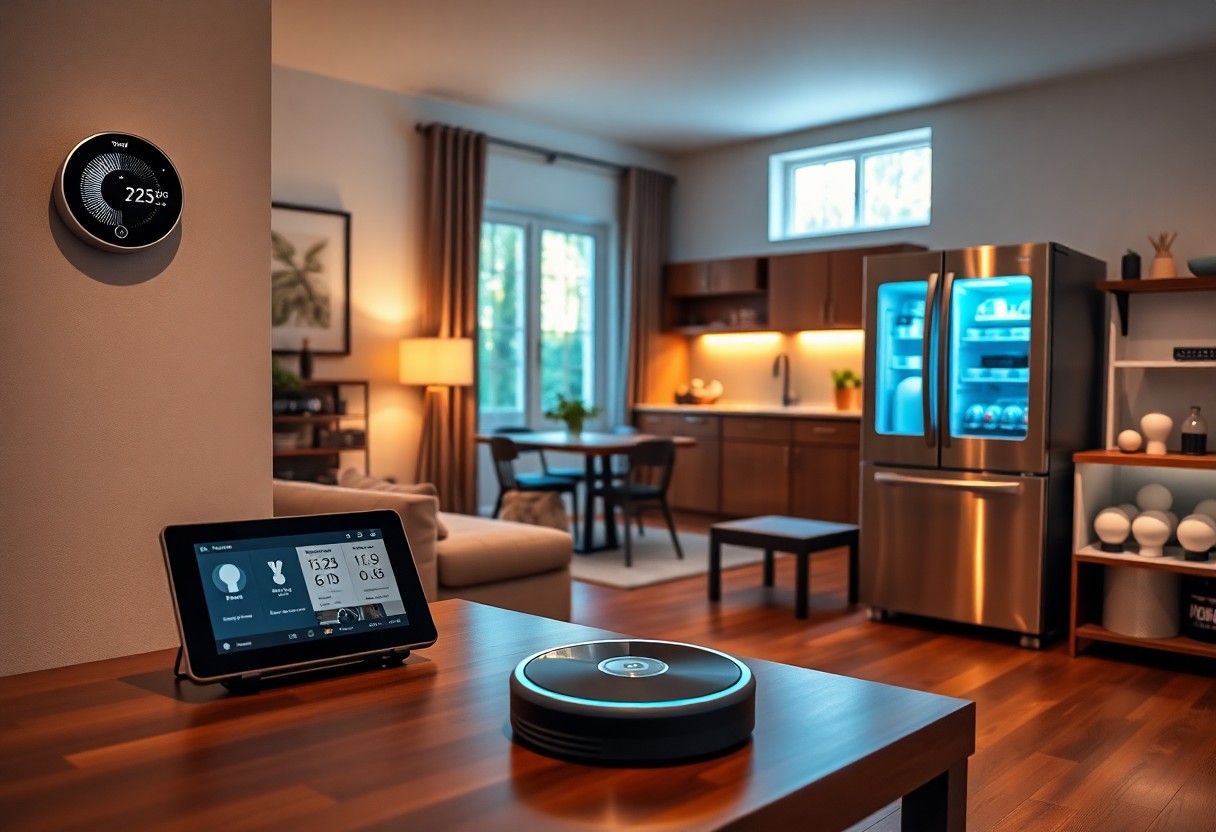
It’s transforming how you live by learning your routines to automate lighting, climate, and chores, giving personalized convenience that feels effortless; it also offers energy savings and smarter security that lower bills and protect your home, while you should watch for privacy and hacking risks as more devices collect data.
Key Takeaways:
- AI personalizes home experiences by learning routines and anticipating needs-tailoring lighting, climate, and media to occupants.
- Automation boosts convenience and efficiency: AI schedules tasks, manages appliances, and optimizes energy use to lower costs.
- AI enhances security and device integration with intelligent monitoring and alerts, while creating privacy and interoperability challenges.
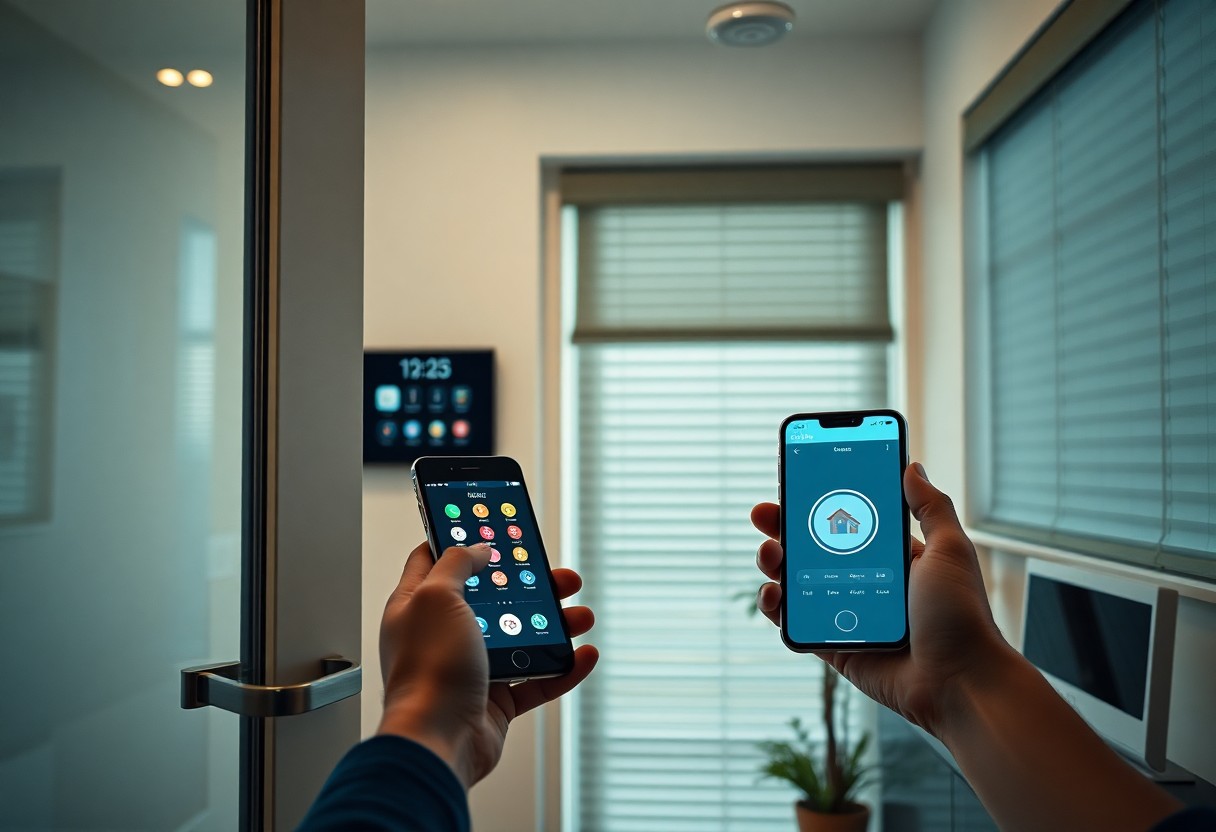
What is Smart Home Technology?
Smart home technology stitches together connected devices-thermostats, locks, cameras, lights and appliances-so you can control and automate them from apps, voice assistants or routines; common standards include Wi‑Fi, Zigbee and Z‑Wave. Devices share data and triggers, so, for example, a motion sensor can turn on lights and start recording. Companies like Nest report 10-12% savings on heating and 15% on cooling when you use adaptive thermostat schedules, showing how automation translates to real-world impact.
Overview of Smart Devices
Smart thermostats (Nest, Ecobee), video doorbells and cameras (Ring, Arlo), smart locks (August, Schlage), bulb systems (Philips Hue) and smart plugs form the core of most setups; you’ll also find water‑leak sensors, window contacts and smart appliances. Many devices support voice control via Alexa, Google Assistant or HomeKit and integrate through hubs or platforms like Home Assistant and IFTTT. Sensors that detect motion, temperature, and water leaks are often the most immediately useful for automations and prevention.
Benefits of Smart Homes
You gain energy savings, stronger security, and daily convenience: automated schedules and geofencing reduce wasted heating and lighting, remote cameras and locks let you secure and check your home from anywhere, and voice or app control speeds routine tasks. Some insurers will offer discounts for monitored security systems, and accessibility gains-like voice‑controlled lighting-help dozens of millions who need assistive tech. Improved safety and lower bills are the most compelling benefits for many homeowners.
To make benefits concrete, set a thermostat schedule plus occupancy sensing to cut HVAC runtime, use smart plugs to monitor appliance draw, and create an “away” scene that locks doors and arms cameras. Combining time‑of‑use utility data with load scheduling can shift high‑consumption tasks to off‑peak hours. Also be aware that outdated firmware or weak passwords can expose devices-so you should enable auto‑updates and strong authentication to keep the advantages without added risk.
How AI Enhances Smart Home Devices
Voice Assistants and Their Magic
You use voice assistants like Alexa, Google Assistant and Siri to streamline tasks: multi-turn dialogue lets you follow up without repeating context, while routines (for example, “goodnight” to lock doors and dim lights) save time. Local wake-word detection and on-device intent parsing cut latency to tens to hundreds of milliseconds and improve privacy, but occasional misrecognitions can trigger unintended actions, so you should review permissions and voice purchase settings.
Smart Security Systems
AI-equipped cameras and sensors now filter noise by detecting human shapes, faces and unusual motion patterns, so your system sends fewer false alarms and focuses on real threats; for instance, modern models distinguish pets from people to reduce nuisance alerts. At the same time, facial recognition and cloud storage introduce privacy and bias risks, so you need to verify vendor policies and encryption standards.
Many security solutions perform edge processing, running neural nets on the camera to send only event clips to the cloud, which lowers bandwidth and exposure. Companies use models trained on millions of frames to improve accuracy, and features like encrypted storage, two-factor authentication and tamper alerts protect your data. However, laws vary: some jurisdictions restrict biometric use, and documented biases in face algorithms mean you should test performance in your setting and keep firmware up to date to mitigate vulnerabilities.
The Role of IoT in Home Automation
IoT stitches sensors, hubs and cloud services so you can orchestrate lights, climate and security from one place; today there are more than 14 billion connected devices worldwide, and that scale lets you automate complex routines like wake-up lighting plus coffee maker start. Behind the convenience lie interoperability and security trade-offs, so you’ll want devices that support open standards and strong authentication to avoid data exposure.
Connecting Devices Seamlessly
When devices speak common protocols like Wi‑Fi, Zigbee, Z‑Wave or the new Matter standard, you can build unified scenes-your smart lock triggers lights and camera recording when you arrive. Many ecosystems now let you link 10-20 devices per room into single routines, but insecure defaults such as weak or unchanged passwords remain a top risk you should fix during setup.
Real-Time Data and Insights
Sensors reporting every few seconds to minutes give you actionable feedback-smart meters often push 15‑minute energy reads while motion sensors update in under a second-so you can spot abnormal usage, tune schedules, and cut costs. Strong encryption on those streams is crucial to protect your behavior patterns and location data from misuse.
Edge processing now lets devices analyze data locally with latencies under 50 ms, enabling lifesaving actions like leak detectors that can automatically shut off your water within minutes and HVAC predictive maintenance that can lower repair costs by up to 30%; you’ll get faster responses, reduced cloud bills, and less raw data sent offsite, but you must balance on‑device intelligence with firmware updates to avoid new vulnerabilities.
AI and Energy Efficiency
By analyzing occupancy, weather forecasts and utility rates, AI cuts waste by adjusting systems automatically and shifting heavy loads to off-peak hours; studies show smart scheduling can reduce HVAC energy use by around 10-15%. You can link devices to demand-response programs and get tailored tips – see The Future of Smart Homes: AI, Automation & Connectivity for implementation examples.
Smart Thermostats
Beyond manual schedules, smart thermostats from Nest and Ecobee learn your patterns, use geofencing and multi‑sensor data to precondition rooms, and integrate weather forecasts to avoid unnecessary runtime; many users report 10-15% savings on heating and cooling, and utilities often offer rebates that speed payback to under two years.
Energy Monitoring Systems
Many whole‑home monitors like Sense and Emporia use edge ML and non‑intrusive load monitoring to break down consumption by device, delivering real‑time insights so you spot phantom loads, oversized appliances, or faulty circuits and act before bills spike.
With disaggregation algorithms you’ll see device‑level trends, alerts for abnormal draws, and integrations that automate responses – for example AI can throttle EV charging during peaks or prioritize battery use when rates spike; however, beware of privacy and network security when sharing fine‑grained usage data with cloud services.
The Future of AI in Homes
You’ll notice AI shifting from novelty to backbone: edge models run locally to cut latency and preserve privacy, while energy systems learn patterns to lower bills-Nest reported smart thermostats can save about 10-12% on heating and up to 15% on cooling. Appliances will increasingly self-diagnose and order parts, and you’ll face rising attack surfaces: the 2016 Mirai botnet infected roughly 600,000 IoT devices, so security will matter as much as convenience.
Trends to Watch for
You’ll see three clear trends: on-device AI and federated learning (Google used it in Gboard) to reduce raw data sharing, multimodal assistants combining voice, vision and sensors for context-aware actions, and stronger standards for interoperability so your devices actually work together. Companies are investing in these because they cut cloud costs and latency, but fragmentation means you’ll still juggle apps until common protocols gain traction.
Upcoming Innovations
You’ll encounter smarter home energy management with vehicle-to-home (V2H) and grid services, predictive appliance maintenance, and ambient health monitoring that flags issues passively. Pilots from firms like Nuvve and Enel X show V2G/V2H can smooth peak demand, and manufacturers such as GE Appliances already offer remote diagnostics, so these innovations move from lab to living room fast.
Going deeper, predictive maintenance uses vibration, sound and thermal sensors plus ML to spot faults weeks earlier, lowering repair costs and downtime; GE Appliances’ SmartHQ and similar platforms demonstrate automated alerts and remote fixes. Meanwhile, V2H pilots let your EV act as a home battery during outages or peak-price periods, and federated updates mean models improve across homes without sharing raw audio or video-giving you benefits while reducing central data exposure.
To wrap up
Following this, you can see how AI quietly learns your routines, automates chores, boosts energy efficiency, and personalizes entertainment, making your home more comfortable and responsive each day.
FAQ
Q: How does artificial intelligence make common home devices smarter?
A: AI combines sensors, pattern recognition and cloud or edge processing to turn appliances into anticipatory helpers. Voice assistants transcribe intent and coordinate multiple devices; thermostats learn occupancy and weather patterns to adjust temperature proactively; cameras use computer vision to distinguish people from pets and flag unusual activity; refrigerators track contents and suggest shopping lists. Machine learning models optimize device behavior over time, reducing manual inputs and making daily routines more seamless.
Q: What privacy and security risks come with AI-powered homes, and how can I mitigate them?
A: AI systems often collect audio, video and usage data, which can be sensitive if stored or transmitted insecurely. Mitigation steps include choosing devices that support local processing or on-device inference, enabling end-to-end encryption and strong passwords, keeping firmware up to date, using network segmentation (guest networks or VLANs) for IoT devices, reviewing vendor data policies, and disabling unnecessary cloud features. Multi-factor authentication and limiting third-party integrations further reduce exposure.
Q: How do I get different AI devices to work together, and what benefits will I see?
A: Use common smart-home standards (Matter, Zigbee, Z-Wave) or a central hub/bridge that supports multiple ecosystems to enable cross-brand interoperability. Configure routines and rules so devices act in concert-for example, motion triggers lighting and cameras while thermostat adjusts for occupancy. Benefits include energy savings through coordinated scheduling and adaptive control, improved comfort with personalized scenes, simplified automation that reduces manual tasks, and predictive maintenance alerts that extend appliance life.