
You must craft a concise narrative that links vision to daily choices, show concrete examples, warn of misalignment risk, and deliver clarity so your team can recall the strategy and act on it.
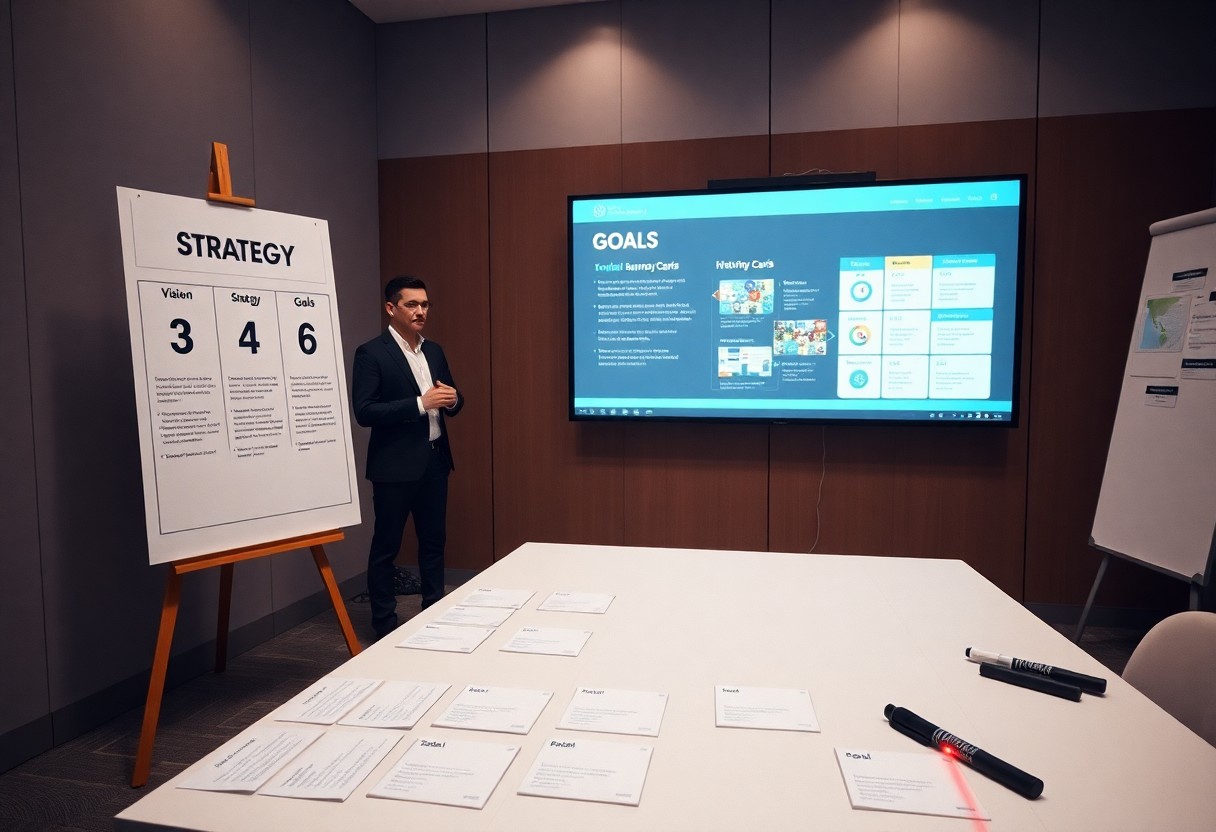
Key Takeaways:
- Use storytelling and vivid examples to make the vision tangible; paint a clear picture of success with concrete scenarios and simple metrics.
- Tie strategy to specific goals, measurable milestones, and visible next steps so people know how progress will be judged and what to do today.
- Repeat a short, memorable message with consistent metaphors, visuals, and visible leader actions; create quick wins that connect daily work to the strategy.

How to Translate High-Level Strategy into Actionable Steps
You convert strategy into tasks by defining clear outcomes, assigning owners, and setting short deadlines so progress is visible; keep a few priority initiatives to avoid overload and track weekly metrics.
Breaking down long-term goals into tangible milestones
Break long-term goals into sequential, one-month milestones so you can deliver small wins and adjust plans; mark dependencies and review them weekly.
Mapping individual contributions to the broader mission
Link each role to a measurable outcome so you see how daily work advances the mission; share dashboards that show impact at scale.
Clarify role KPIs and connect them to specific milestones so you can measure contribution daily; you should give people a simple line-of-sight tool and tell short stories showing how tasks change outcomes. You should use 1:1s to align expectations, remove blockers, and celebrate wins so the impact is visible and motivation stays high.
Factors Influencing Audience Engagement and Retention
Audience focus depends on how clearly you link vision to concrete actions, the strategy relevance, and emotional hooks. This sharpens engagement and retention.
- Clarity of purpose
- Relevance to role
- Emotional connection
- Delivery format
- Frequency and timing
- Credibility of leadership
Tailoring the message for different departmental levels
Managers prefer brief, metric-driven summaries while your frontline teams want practical steps and examples; you should adjust tone, detail, and KPIs per level to raise engagement and alignment.
Choosing the right frequency and timing for delivery
Cadence must fit attention cycles: you should set frequency and timing to match role workloads, test intervals, and adjust based on open rates and feedback.
Experimentation helps you find the optimal rhythm: form a hypothesis, run short tests across departments, and measure engagement signals-attendance, response rates, and behavioral change. Overcommunication can create fatigue and dropoffs, so start conservatively and scale. Weekly huddles, monthly updates, and quarterly town halls offer examples; align timing with work cycles and collect qualitative feedback to refine until metrics improve.
How to Build a Multi-Channel Communication Plan
Design your plan to map channels to audience segments, assign owners, and set measurable KPIs so you can track impact across touchpoints and adjust frequency, tone, and content where gaps appear.
Integrating the vision into daily workflows and meetings
Embed the vision into daily workflows by adding a brief agenda item, linking tasks to strategic goals, and using one-line purpose statements in standups and reviews so you reinforce alignment every day.
Utilizing visual aids and digital platforms for reinforcement
Use consistent visuals-one-pagers, dashboards, and templates-across channels and pin single-source visuals where teams can access them to keep messages aligned and reduce confusion.
You should keep visuals concise, branded, and platform-specific: combine static one-pagers with real-time dashboards, short videos, and micro-content for chat apps. Prioritize mobile-friendly formats, enforce version control, run small tests, and monitor engagement metrics so you can spot and fix conflicting messages before they spread.
Tips for Gathering Feedback and Ensuring Alignment
Collect concise feedback via short surveys and open check-ins so you can refine messages and maintain alignment. Use pulse questions to test clarity and gather actionable items. This keeps teams focused and reduces misinterpretation.
- feedback
- alignment
- two-way communication
- active listening
- surveys
Implementing two-way communication loops for clarity
Design routines where you ask targeted questions, listen for concerns, and respond with concise summaries to confirm two-way communication and prevent misinterpretation.
Measuring comprehension through active listening and surveys
Test comprehension by combining active listening in conversations with brief surveys that quantify understanding, confusion, and next steps you must take.
Combine open prompts in meetings with repeated short surveys to spot trends; ask one open question and one scaled confidence item, track responses over time, then assign follow-up actions you monitor within 48 hours to capture actionable insights and reduce ongoing misalignment.
Conclusion
Summing up, you craft clear, concise messages, anchor strategy in a simple narrative and measurable goals, repeat consistently, and model behaviors so people internalize and act on the vision.
FAQ
Q: How do I craft a simple, memorable vision that sticks?
A: Write a one-sentence vision that describes the future state and who benefits. Use concrete, sensory words and a short metaphor to create a clear mental image. Add a simple metric or timeframe when possible so the outcome feels tangible. Create a two-line supporting explanation that answers: what problem we solve, how we will act, and who wins. Turn the sentence into a 6-12 word tagline plus a 20-40 word elevator line for leaders. Test both versions on three people outside your function and ask each to paraphrase the idea in ten seconds; refine until paraphrases converge. Pair the line with two short, real examples that show the vision already working at small scale.
Q: What structure and channels make a strategy understandable and actionable?
A: Structure messages around three elements: context (why change is needed, one or two data points), ambition (the measurable goal and timeframe), and behaviors (three concrete actions, owners, and near-term milestones). Produce a one-page strategy memo readable in five minutes and a one-slide summary for town halls. Use visuals: timelines, before/after sketches, and a simple decision tree showing trade-offs. Cascade messages in short leader-to-manager-to-team sessions where each attendee states one action they will take. Use pulse checks that ask people to restate the strategy in one sentence and measure change at 30 and 90 days. Share early wins with data plus a short story about who benefited and what changed.
Q: How do we keep vision and strategy present so people act on them over time?
A: Build repetition into daily work: weekly team huddles, visible scorecards or dashboards, and a monthly meeting segment titled “how this links to strategy.” Align role descriptions, incentives, and performance reviews with the three strategic priorities so routine decisions point to the strategy. Require leaders to model the language and cite the strategy when explaining trade-offs or celebrating wins. Include the core vision and one-slide strategy in onboarding and in short learning modules for managers. Measure comprehension (restatement tasks, short quizzes) and impact (leading indicators tied to priorities). Create a quarterly ritual to refresh examples, acknowledge teams that changed behavior, and adjust one element of the plan based on evidence so the strategy stays relevant without losing clarity.