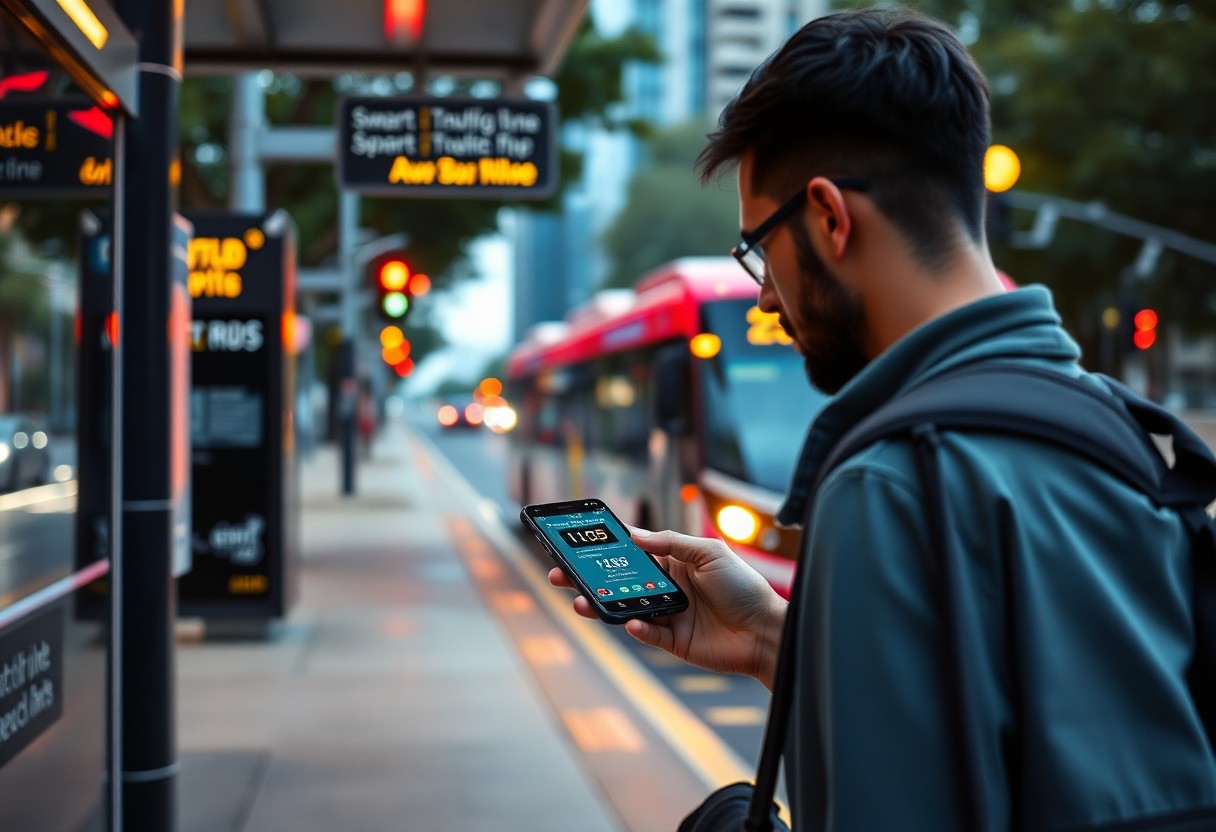
Intelligence now quietly guides your trips with real-time updates, personalized routes that save you time, and safety alerts that help you avoid delays and hazards; it also offers seamless bookings and recommendations that make travel enjoyable, though you should watch for privacy trade-offs as data-driven features learn your habits to improve your journey.
Key Takeaways:
- Real-time navigation and personalization: AI analyzes traffic, transit schedules, and your preferences to optimize routes and reduce commute time.
- Predictive disruption management: AI forecasts delays and offers proactive reroutes, rebooking options, or alternative transport to keep plans on track.
- Seamless, personalized services: AI automates check-in, baggage tracking, voice assistance, and tailored local recommendations for faster, smoother trips.
Smart Trip Planning
Smart algorithms analyze your past trips, saved preferences, and live fares to build efficient plans. They pull data from sources like Hopper and TripIt to predict price drops and create bookings that can save you up to 40% on fares. Within seconds you get optimized routes, time-windowed activities, and synced reservations so you spend less time planning and more time enjoying the trip.
Personalized Itinerary Suggestions
When you set preferences, AI crafts tailored days: it can generate 3 personalized day plans in seconds that factor in opening hours, transit times, and your pace. For instance, if you prefer food markets, the system will prioritize top-rated vendors and suggest time slots to avoid crowds, using ratings and millions of traveler profiles to surface options suited to your tastes.
Real-time Updates
When flights or trains are delayed, AI-driven alerts surface gate changes, weather risks, and alternate connections instantly. Airlines and apps can automatically rebook you or book a hotel, often resolving issues within minutes. Notifications also adjust your itinerary and ride pickups, so you avoid missed connections and long waits without combing multiple sites.
These systems combine live feeds (airline APIs, weather, traffic), crowdsourced reports, and machine-learning models trained on millions of trips to predict disruptions 30-90 minutes before traditional alerts. For example, predictive routing can suggest a different connection that reduces missed-connection risk by highlighting alternative flights and ground transport, giving you time to rebook and secure options before seats run out.
Enhanced Navigation
AI stitches together real-time traffic, historical patterns, and sensor data to give you smarter routes: lane-level guidance, predictive ETAs, and multimodal suggestions (drive, transit, micro-mobility). By training on billions of trips, these systems often provide real-time rerouting that can shave minutes off your commute during peak hours and help you choose the fastest or cheapest option depending on your preferences.
AI-Powered Maps
You get maps that learn from crowd-sourced reports and telemetry: services with over 1 billion monthly users feed anonymized speed and incident data to models that predict congestion hours ahead. When you compare alternatives, the app can show a transit+ride-share combo, estimate total door-to-door time, and highlight toll vs free routes so you can pick the best trade-off for cost, speed, or comfort.
Voice Assistance
You can control navigation hands-free-ask to “navigate home,” change routes, or request ETAs while keeping both hands on the wheel. Integration with assistants like Google Assistant or Siri lets your voice alter lanes, add stops, or summon alternate routes without touching the screen, reducing manual distraction and keeping your focus on driving.
Hands-free commands have a clear safety payoff: with distracted driving linked to thousands of yearly fatalities (NHTSA reported 3,142 deaths in 2019), relying on voice to manage navigation reduces manual interaction. At the same time, be aware that voice data may be stored or used to improve services, so you should review privacy settings and delete recordings if you want to limit retention while still benefiting from convenience and safety.
Discovering New Places
When you’re hunting new places, AI stitches together your past trips, time of day, weather and live events to suggest spots you’ll like. Apps like Google Maps, TripAdvisor and Airbnb combine millions of reviews, geotags and reservation data to surface real-time, personalized picks-so you find a cafe with 4.7 stars and free Wi‑Fi when you need it. Be aware that such systems rely on your data, so privacy settings affect what appears for you.
Local Recommendations
Systems analyze your ratings, search history and social signals to deliver local recommendations tuned to your tastes. For example, Google Maps’ “For You” feed and Yelp’s curated lists suggest restaurants that match dietary filters, price range and opening hours; collaborative filtering often promotes places that similar travelers rated highly. Watch out for paid placements or popularity bias, which can push tourist traps ahead of smaller, higher-quality options.
Hidden Gems
By mining geotagged photos, short reviews and niche forums, AI uncovers hidden gems you might never find in guidebooks. It spots venues with few reviews but strong local praise-like a family-run bistro with a high local sentiment score or a mural alley favored by photographers-and elevates them using novelty and relevance signals. Expect off-the-beaten-path discoveries that fit your interests.
Behind the scenes, algorithms combine novelty scoring, natural language processing and recency-weighted signals to rank hidden gems: low volume but high local sentiment earns priority, while sudden spikes trigger freshness checks. You should cross-check recent photos, verify opening hours and read the latest reviews to avoid closed businesses or outdated listings, and when possible support small owners directly through bookings or tips.
Language Translation
AI-driven translation moves beyond phrasebooks by giving you real-time voice and text conversion across over 100 languages. Neural models let you read signs, order food, and follow announcements without pausing your day; apps like Google Translate and Microsoft Translator offer conversation modes and camera translation that handle idioms and context far better than earlier rule-based systems.
Breaking the Language Barrier
When you point your phone at a sign or speak to a vendor, AI performs instant optical and speech translation so you grasp meaning within seconds. Neural networks handle idioms and local phrasing, letting you navigate menus, transit maps, and safety notices with confidence. For many common languages, accuracy surpasses older systems, making spontaneous interactions abroad far smoother.
Communication Made Easy
AI-powered conversation modes let you hold bilingual chats: you speak in your language, the app replies aloud in theirs, and vice versa, so you can complete transactions and ask directions without an interpreter. Widely used in customer service and hospitality, these tools cut wait times and misunderstandings, especially for routine requests like booking or ordering.
In practical use, you’ll find apps like Microsoft Translator enable multi-person conversations and camera translate handles menus; businesses integrate APIs into kiosks and chatbots so your requests are translated end-to-end. However, AI still slips on technical or medical language, so if you’re dealing with prescriptions or legal forms, verify translations with a human – mistranslation in those contexts can be dangerous.
Safety and Security
You benefit from AI monitoring millions of data points daily to flag threats across airports, trains, and rideshares; systems spot anomalies in CCTV and passenger flows long before they escalate. For deeper reading on planning and operational impacts see How AI is revolutionizing travel planning. Many providers combine biometrics and behavior analysis to reduce fraud, and unattended baggage and intrusion alerts trigger 24/7 responses that protect your journey.
AI in Travel Safety
You rely on AI-powered CCTV analytics, sensor fusion, and predictive models that analyze passenger flow, weather, and operational data to prevent incidents. Airlines and airports process millions of sensor and ticketing records to forecast bottlenecks hours ahead; facial recognition speeds boarding while reducing false IDs. In high-traffic hubs these tools lower delays and help you avoid crowded routes by suggesting safer alternatives in real time.
Emergency Assistance
When emergencies happen, AI-driven systems route your SOS, analyze context, and notify responders with location, injury indicators, and risk level. Chatbots handle initial triage 24/7 while algorithms prioritize calls and send on-site teams or telemedicine links; some platforms integrate wearables to detect falls or cardiac events and trigger immediate medical alerts for your safety.
AI also triages severity by combining your phone’s GPS, caller audio, and wearable vitals to pick the nearest responder and share live data. Algorithms can identify the closest ambulance or security team, stream a live video feed to dispatchers, and give you step-by-step instructions while help is en route. In pilot programs at major transit systems these workflows have improved coordination and kept passengers like you informed during incidents.
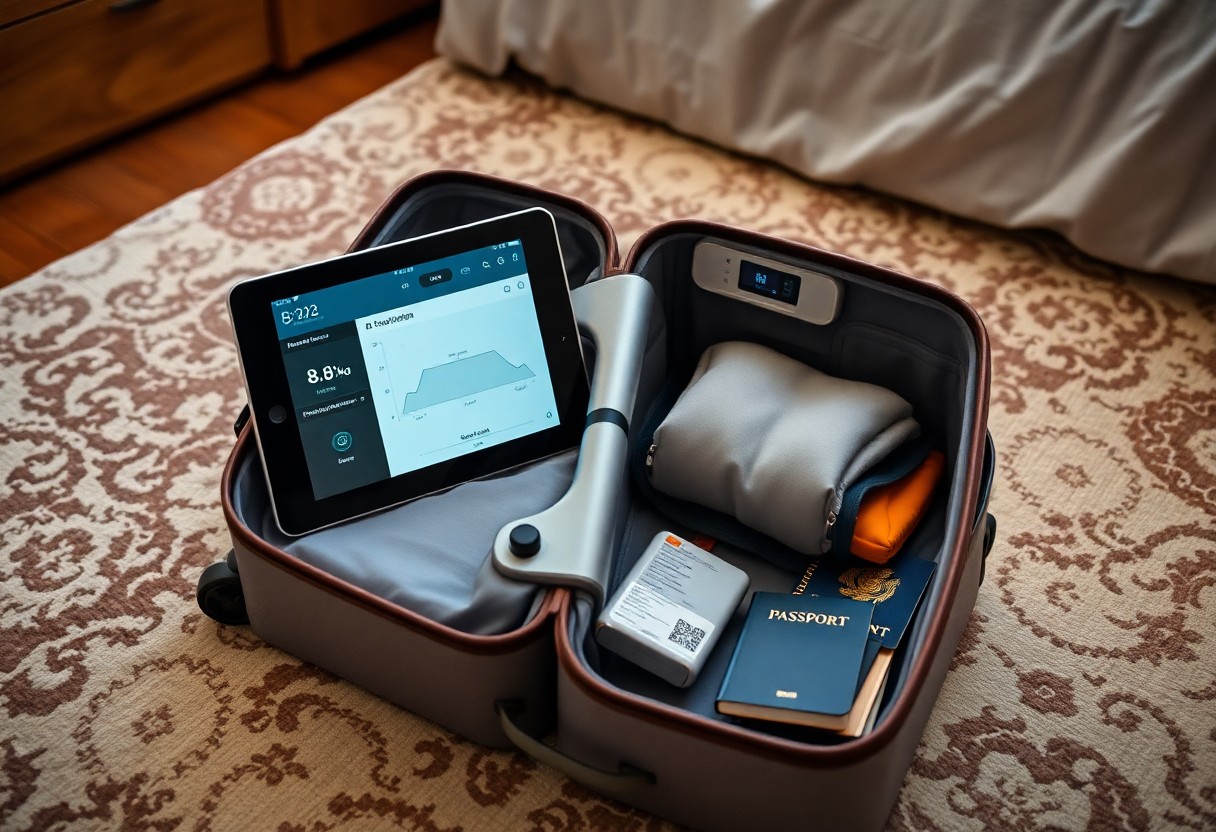
Smart Packing and Preparation
Smart algorithms scan your itinerary, airline baggage rules and local conditions to tailor what you bring. Using services like PackPoint and TripIt, you get itemized lists that match trip length, activities and equipment needs – for example, a 5-day hiking trip adds a lightweight sleeping bag and trekking poles. This helps you avoid overweight fees and unnecessary bulk while keeping necessarys accessible.
Packing List Generators
You enter destination, dates and activities, and the generator outputs a prioritized checklist-e.g., a 3-day business trip suggests 2 shirts, 1 suit, chargers and a compact umbrella. Templates for beach, conference and backcountry travel speed packing, integrations with your calendar update lists automatically, and saved preferences let you reuse optimized sets to save time on every trip.
Weather Adaptation
AI ingests hourly forecasts, radar and microclimate models to adjust items: if precipitation probability >50% it adds a waterproof layer; if UV index >7 it suggests SPF 50 and a sunhat; if temps swing between 4°C and 18°C it recommends packable layers. It also flags extreme heat (>40°C) or severe cold (<-10°C) so you can plan safety gear.
When forecasts change, your list updates in real time-if a storm arrives 24 hours before departure it auto-adds a rain cover, extra socks and plastic bags for electronics. Some apps sync with smart luggage scales so you can see weight impact, and checklist swaps (down jacket vs fleece) consider airline limits like 23 kg on many carriers to help you avoid overweight penalties while staying prepared for local conditions.
Final Words
Now you can see how AI smooths your travel by predicting delays, personalizing routes, suggesting timely check-ins, and translating languages on the go, so your journeys are faster, less stressful, and more enjoyable; it learns your preferences to optimize routes, alerts you to savings, and helps you discover new places with confidence.

FAQ
Q: How does AI make daily route planning and navigation faster and more reliable?
A: AI analyzes real-time traffic, historical patterns, weather, roadworks and public-transit data to predict travel times and suggest optimal routes. It continuously updates ETAs and triggers dynamic rerouting when congestion or incidents appear, often combining driving, walking and transit legs into a single multimodal plan. Machine learning models also learn your habits-preferred roads, typical departure times and tolerance for detours-to offer routes that fit your routine, reduce idle time, and lower fuel or energy use.
Q: In what ways does AI improve safety and reduce disruptions during travel?
A: AI systems detect and classify hazards from traffic cameras, sensors and crowd-sourced reports to issue timely alerts about accidents, icy roads or sudden slowdowns. Predictive maintenance powered by AI flags vehicle or infrastructure issues before failures occur, lowering breakdown risk. For public transit, AI forecasts crowding and service disruptions so you can avoid crowded trains or buses, and it helps first responders prioritize incidents by estimating severity and impact on traffic flow.
Q: How does AI personalize the travel experience and minimize stress throughout the trip?
A: AI builds profiles that incorporate preferences, accessibility needs, schedule constraints and past behavior to generate tailored itineraries, timely reminders (boarding, transfers, check-in), and relevant local recommendations. It automates routine tasks like mobile check-in, baggage tracking and payment, surfaces the best fares or carbon-efficient options, and integrates with voice assistants for hands-free updates. By anticipating delays, suggesting contingency plans, and reducing manual coordination, AI shortens decision-making and keeps travel predictable and smoother.