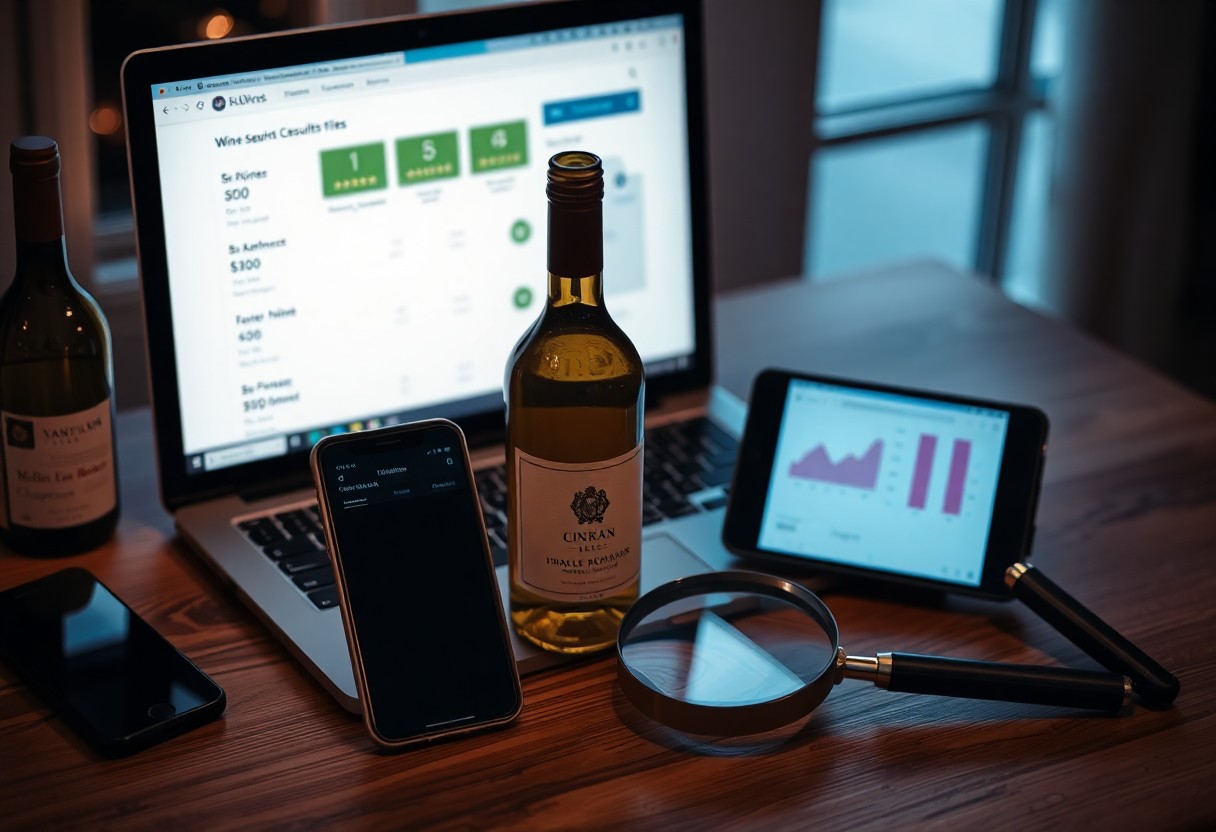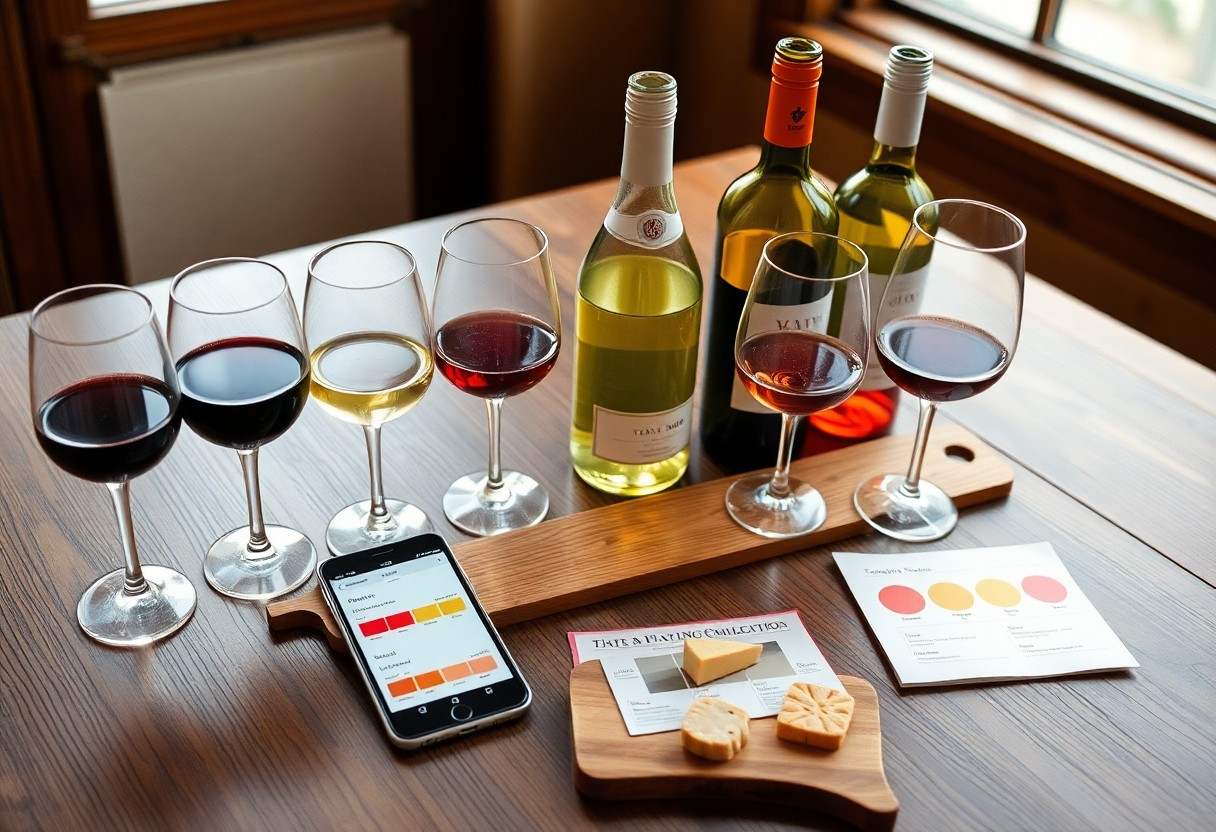
Ratings show you value and risk; you use search tools to compare prices, spot overpriced bottles, and find top-rated bargains. Use filters, reviews, and price history to shop smarter and protect your wallet.
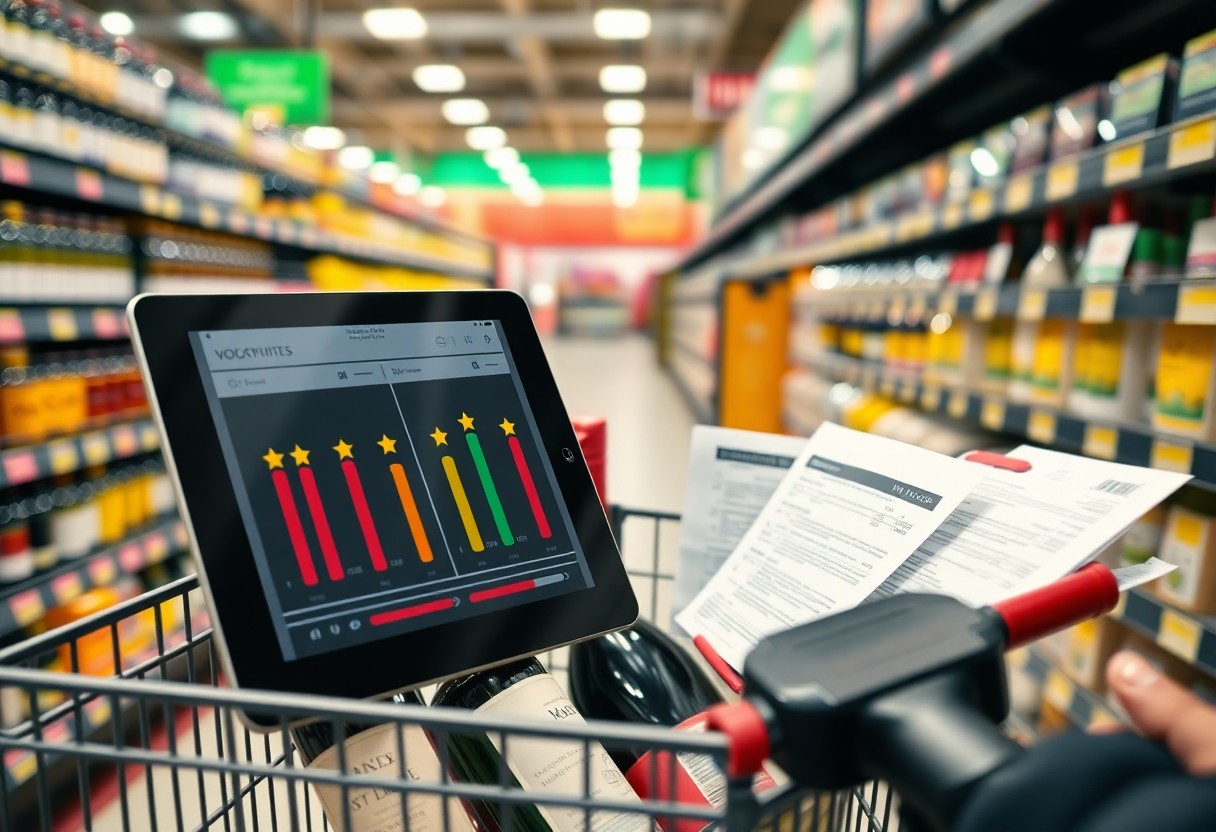
Key Takeaways:
- Search tools let you filter by vintage, region, price range and critic/user ratings; sort by price-per-rating (price divided by score) to identify best-value bottles.
- Cross-check aggregated ratings and tasting notes across multiple platforms to find consensus and spot outliers; prioritize consistent high scores over single glowing reviews.
- Set price alerts and monitor historical price charts plus shipping and tax fees so you compare the true landed cost before buying.

Essential Factors When Choosing a Wine Search Platform
- Database depth
- Real-time pricing
- Ratings integrity
Assessing platform features helps you compare wine, prices, and ratings across vendors. The platform should offer deep databases, live price feeds, and verified reviews to avoid outdated or misleading listings.
Database Depth and Retailer Network
Coverage of shops and vintages matters: you want a service with wide retailer ties and archival listings so you can find rare bottles and accurately compare prices.
Real-Time Accuracy of Pricing Data
Pricing accuracy saves you from paying inflated or stale prices; you should use tools that update feeds frequently and flag suspicious discrepancies with real-time alerts.
Accuracy relies on frequent scraping, verified retailer APIs, and timestamped listings so you can trust comparisons; prioritize services that display last-updated times and transparent price sources to avoid costly mistakes.
How to Use Advanced Search Filters
Use advanced filters to refine searches by price, ratings, vintage, and availability so you can compare bottles more accurately and save time.
- Set a clear price range so you compare like bottles.
- Choose minimum ratings to surface trusted reviews.
- Filter merchants to check location and shipping options.
| Filter | Purpose |
|---|---|
| Price Range | Keep comparisons consistent and spot bargains. |
| Ratings & Reviews | Prioritize well-reviewed bottles and avoid low-scoring listings. |
| Merchant & Location | Assess reliability, shipping times, and tax/import implications. |
Narrowing Results by Region and Varietal
Select specific regions and varietals to focus comparisons on styles you prefer, letting you surface bottles with similar profiles and reduce irrelevant options.
Filtering by Merchant Reliability and Location
Check merchant ratings, return policies, and shipping origin so you avoid delays or counterfeit risks; prioritize sellers with high feedback and nearby warehouses to lower cost and transit time.
Inspect seller history, review counts, and verification badges; you should verify provenance for older vintages, confirm tax/import effects based on shipping origin, and favor merchants offering insured shipping, clear return terms, and payment protection. Watch for unusually low prices as a red flag that may indicate counterfeit stock or poor storage.
Tips for Executing a Comprehensive Price Comparison
Compare live listings, ratings and merchant reputations to find the best value across platforms. Any overlooked fees like shipping or taxes can erase your savings.
- price comparison
- ratings
- shipping
- taxes
- bulk discounts
Comparison Checklist
| What to check | Why it matters |
| Listed price | Shows base cost for per-bottle comparison |
| Shipping & taxes | Hidden fees can nullify apparent bargains |
| Ratings & reviews | Higher-rated bottles offer better value per quality |
Calculating Total Cost Including Shipping and Taxes
Calculate the full total cost by adding listed price, estimated shipping, and sales taxes; use cart tools or store calculators to preview the final price before buying.
Identifying Seasonal Price Drops and Bulk Discounts
Watch for seasonal price drops after harvests and around holidays, and compare per-bottle costs to spot bulk discounts that lower your effective price.
Seasonal sales often align with post-harvest releases, year-end clearances, and retailer promotions, so set alerts and monitor price history tools to catch meaningful savings; check minimum-order thresholds for free shipping and calculate per-bottle cost to avoid traps where quantity discounts are offset by limited availability or extra fees.
Factors to Consider When Evaluating Ratings
Check how sample size, scoring scale and reviewer bias shape ratings so you can weigh scores against price and tasting notes. Perceiving context helps you judge whether a high score matches your taste or inflated market hype.
- Sample size: small pools increase volatility
- Scoring scale: 100-point vs 20-point affect comparisons
- Reviewer type: critic vs community shifts emphasis
- Consensus: consistent praise reduces buying risk
Distinguishing Between Professional Critic and Community Scores
Compare critic scores, which reflect trained tasting and consistency, with community ratings that show popular taste and wider variance; you decide which aligns with your palate and budget.
Understanding Vintage Variance and Maturity Windows
Account for vintage differences and the wine’s maturity window; you should check weather patterns and critic notes to see if a bottle is at peak or still improving.
Study how growing-season heat, rainfall and harvest timing alter acidity, sugar and tannin; you should use vintage charts, producer tasting notes and consumer reports to map probable drinking windows, avoid overpriced or underripe bottles, and factor in bottle variability risk.

How to Use Historical Data for Better Purchases
Historical data shows patterns that help you time purchases; use charts to spot sharp price spikes and long-term declines. Consult Frequently Asked Questions for data explanations so you can buy when wines offer best value.
Tracking Price Trends Over Multiple Years
Years of data let you compare vintages and spot consistent declines or sudden spikes; you can choose to wait or buy when averages hit target ranges.
Utilizing Alerts for Specific Price Points
Alerts let you set exact price triggers so you get instant notifications when listings match your budget, reducing the chance of missing limited offers.
When you set alerts, create multiple thresholds (e.g., typical, bargain, and urgent) and include filters for vintage, bottle size, seller region, and condition so alerts are precise. Watch for suspiciously low prices and always verify seller ratings before buying. Pair alerts with historical charts to judge whether a drop is a real buying opportunity or a temporary blip, and act fast on confirmed deals.
Pro Tips for Mobile and Real-Time Comparisons
Use your phone to compare prices and ratings across apps in real time, so you can catch deals and set alerts.
Mobile Comparison At-a-Glance
| Focus | Quick Actions |
| Label scanning (label scanning) |
|
| Live stock (live stock availability) | Tap store listings, enable location, and confirm with staff |
Using Label Scanning Features Effectively
Scan labels with the app camera so you can instantly view ratings, tasting notes, and current prices; keep lighting steady and verify matches to avoid errors.
Verifying Live Stock Availability On-the-Go
Check the app’s local inventory so you can see real-time stock and pickup options; call the store if counts seem off to avoid wasted trips.
Confirm inventory timestamps and differences between online and in-store counts before you head out; enable push notifications for inventory changes and use filters for nearest stores. Ask staff about reserved bottles to prevent surprises. Perceiving rapid stock drops as indicators of demand helps you prioritize purchases.
Summing up
Now you apply filters, cross-check ratings, set price alerts, and read tasting notes to compare bottles efficiently; rely on averages and verified reviews, track deals across retailers, and prioritize value metrics to shop like a pro.
FAQ
Q: How do I compare wine prices across multiple retailers quickly?
A: Use aggregator sites such as Wine-Searcher and Vivino to pull retailer prices side by side, and enable browser extensions or mobile apps that show price comparisons on product pages. Convert prices to a common currency and bottle size, then calculate price-per-liter to compare like for like. Include estimated shipping, taxes, and bottle deposits in the total cost before comparing. Check price-history charts on the same tools to spot recent spikes or dips, and set alerts or watchlists to get notified when a target price is reached.
Q: How should I interpret and compare ratings from different sources?
A: Treat user scores and critic scores as complementary information: user scores show consistency among drinkers, while critics reveal expert preferences and tasting notes. Convert different scales to a common baseline (for example, convert 5-star to a 100-point equivalent) before averaging. Weight scores by number of reviews or use the median score to reduce influence of outliers. Read a few representative tasting notes and check which vintages differ; large score swings between vintages often explain price differences. Pay attention to the source of critic ratings (trusted critics carry more predictive value for aging and collectability).
Q: What pro-level techniques help me get the best value when buying wine online?
A: Calculate price-per-point (price ÷ score) to rank bottle value when comparing similarly scored wines; use a minimum score threshold to avoid low-quality bargains. Monitor price-history and set alerts for dips, then buy when price-per-point hits your target. Combine retailer coupons, case discounts, and free-shipping thresholds to lower per-bottle cost. Compare buying by the case versus single bottles after applying shipping and storage fees. Verify seller ratings and return policies before purchase, and cross-check provenance and cellar reports (CellarTracker, auction records) for higher-end bottles to avoid overpaying for scarce vintages.