
Guide: You learn crushing, pressing and fermentation that creates alcohol; maintain hygiene since contamination can be dangerous; aging and oak shape flavor, so ripe grapes and cleanliness ensure quality.

Key Takeaways:
- Grapes are harvested and crushed, then yeast ferments the sugars into alcohol; red wines ferment with skins for color and tannins while whites usually separate skins early.
- Winemakers manage fermentation temperature, yeast selection, and maceration time to shape flavor, aroma, and body.
- Aging choices (stainless steel, neutral tanks, or oak), blending, and filtration refine balance before bottling.
Harvesting and Vineyard Management
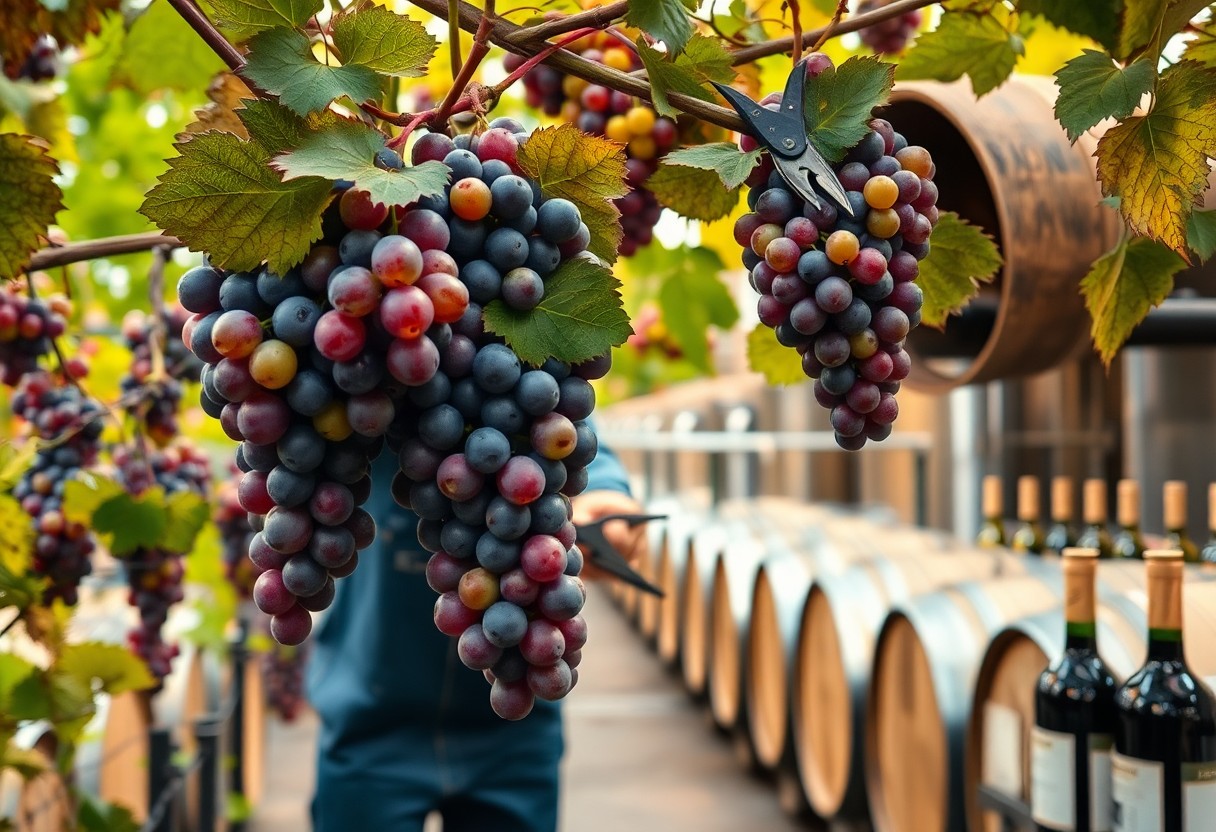
Vines demand pruning, canopy control and pest checks so you pick at peak ripeness; timing affects flavor and yield, while poor management raises risks like disease and lost crop.
Assessing Ripeness and Sugar Content
You check Brix, acidity and tannins by testing and tasting so you decide harvest day; higher sugar raises potential alcohol, underripe fruit gives green flavors.
Manual versus Mechanical Harvesting
Choices for you include hand or mechanical harvest: handpicking preserves berry integrity and allows sorting, while machines speed work but can bruise grapes and add stems, affecting quality.
Handpicking gives you control to select clusters and avoid rot, boosting quality; mechanical harvesters cut labor and often work at night to preserve acidity, but can cause more MOG and vine damage, so wineries balance cost, speed and final style.
Crushing and Pressing
Crushing separates skins and juice so you can begin fermentation; pressing then extracts liquid while you must avoid oxidation to protect aromas. Learn more at The Art & Science of Winemaking in 6 Steps.
Extracting the Must from the Grapes
Gently press or crush to free the must; you should monitor pressure so you don’t crush seeds and add bitterness.
Variations in White and Red Wine Processing
White wines usually press before fermentation so you preserve delicate aromas; reds ferment with skins so you extract color and tannin.
When you weigh skin contact, know longer maceration builds tannin and structure but raises the risk of over-extraction; shorter contact with immediate pressing preserves fruit freshness and lowers oxidation exposure.
The Fermentation Process
Fermentation converts grape sugars into alcohol and CO2; you guide this biochemical change by choosing yeast, temperature, and time. Watch for stalls and oxygen that can spoil a batch; steady control yields predictable flavor and alcohol.
The Role of Yeast in Alcohol Conversion
Yeast consumes sugars and produces alcohol and aromas; you select strains for dryness, aroma, and stress tolerance. Use trusted strains to avoid off-flavors from wild yeasts, and manage nutrients so fermentation proceeds cleanly.
Yeast Overview
| Function | What You Should Do |
|---|---|
| Convert sugars to alcohol | Choose strain for desired alcohol tolerance and flavor |
| Create aroma compounds | Pick strain profile and monitor nutrients |
| Risk from wild yeasts | Avoid contamination with sanitation and cultured strains |
Monitoring Temperature and Duration
Monitoring fermentation temperature and duration keeps flavors on track; you maintain ranges specific to each yeast to avoid heat stress or sluggish ferment. Track time and gravity so you know when fermentation finishes and when to press or rack.
Manage temperature within yeast-recommended ranges-cooler for whites, warmer for reds-and check specific gravity daily; spikes above 30°C risk off-flavors or stuck fermentation, while extended low temps slow conversion.
Temperature & Timing
| Parameter | Recommended Action |
|---|---|
| White wines | Keep ~10-18°C for clean aromas |
| Red wines | Keep ~20-28°C for fuller extraction |
| Danger | Spikes above 30°C can kill yeast or create faults |
| Completion | Confirm with stable specific gravity readings |
Clarification and Stabilization
Clarification removes haze and stabilizes wine so you can serve clear bottles; processes like cold stabilization and fining help you remove suspended solids and proteins. Watch for animal-derived fining agents if you avoid them, and expect clearer color and longer shelf stability.
Fining Agents and Sediment Removal
Fining uses agents that bind haze and create sediment you later rack off; you’ll see lees settle and can remove them to clarify wine. Be aware of egg, milk, or fish-derived agents if you have dietary restrictions; modern vegan alternatives are available to achieve the same clarity.
Ensuring Visual Brilliance through Filtration
Filtration polishes your wine by removing fine particles and microbes, producing a bright, shelf-stable bottle ready for bottling. Balance is key: avoid overfiltration, which can strip aroma and texture, while sterile filters will protect against refermentation in the bottle.
You should choose filter pore size to match your goal: coarse depth filters for polish, membrane filters (0.45-0.22 µm) for microbial stability. Monitor flow and replace clogged cartridges; sterile filtration at ≤0.45 µm prevents refermentation but can alter mouthfeel, so test on small lots first.
Aging and Maturation
Aging influences a wine’s balance: you choose duration and conditions that soften tannins, build complexity, and avoid oxidation.
Maturation in Oak versus Stainless Steel
Oak provides vanilla, toast and gentle micro-oxygenation, while stainless steel preserves pure fruit and fresh acidity you rely on for youthful styles.
Developing Secondary Flavor Profiles
Tannins, time and barrel toast coax secondary notes-leather, tobacco or nuts-so you balance aging to add complexity without losing fruit.
You can trace secondary development to malolactic conversion, lees stirring and oak toast: esters evolve into baked-fruit, nut and spice notes, while aggressive toast or poor hygiene invites oxidation or Brettanomyces. Control contact time, barrel type and cellar conditions to shape a balanced, expressive aroma profile.
Bottling and Final Preparation
Bottling locks your finished wine into sterile bottles after clarification and stabilization; you control fill levels, limit oxygen exposure, and ensure sanitary handling so aromas and texture remain intact.
Sulfite Addition and Preservation
Sulfite addition lets you protect wine from oxidation and microbial spoilage; you dose carefully because sulfites can trigger allergies, and you test levels to meet safety and labeling rules.
Sealing and Labeling for the Market
Sealing uses corks, screw caps or capsules to keep air out while you apply tamper-evident closures; labeling must state origin, alcohol, and any allergen warnings so consumers are informed.
Labels also carry batch codes, barcodes, and producer contact info so you can trace bottles; you follow local regulations for language and claims, and prioritize accurate traceability to avoid recalls.

Summing up
Summing up, you can trace wine from grape harvest through fermentation, aging and bottling, so you understand quality factors and tasting cues to make informed choices.
FAQ
Q: How is wine made – step-by-step for a typical bottle?
A: Grapes are harvested at optimal ripeness, either by hand or machine. They are destemmed and crushed to release juice; white wines are often pressed immediately while red wines keep skins with the juice to extract color and tannins. Yeast, either added commercial strains or native wild yeast, ferments sugars into alcohol with temperature control guiding flavor and fermentation speed. Fermentation typically lasts one to two weeks for primary fermentation, with cooler temperatures for whites and warmer temperatures for reds. Maceration on the skins follows primary fermentation for many red wines to build color and tannin, while whites usually avoid extended skin contact. Pressing separates remaining juice from solids, and malolactic fermentation commonly converts sharper malic acid to softer lactic acid for creamier texture in many reds and some whites. Clarification through racking, settling, fining, or filtration removes solids, then aging in stainless steel, concrete, or oak barrels shapes flavor and structure over weeks to years depending on style. Blending, small adjustments (acidity, blending lots), and a measured addition of sulfur dioxide for protection happen before bottling.
Q: What are the main differences between making red, white, and rosé wines?
A: Skin contact determines color and many structural elements: red wines ferment with skins to extract color and tannin, white wines are pressed off skins early to preserve bright aromatics, and rosés get brief skin contact to pick up pink hues without heavy tannin. Fermentation temperatures differ, with whites kept cooler (roughly 12-18°C) to preserve fruit aromas and reds fermented warmer (roughly 20-30°C) to extract tannins and deepen flavor. Malolactic conversion is common in reds to soften acidity and add creaminess and is sometimes used in whites for richness but often avoided for highly aromatic varietals. Pressing timing and the extent of maceration control tannin and body, and choices about aging vessels-stainless steel for freshness or oak for weight and spice-further shape the final wine.
Q: What key terms on labels and in winemaking should every drinker know?
A: Vintage indicates the year the grapes were harvested and helps set expectations about weather effects on style. Appellation or region signals where the grapes were grown and often suggests climate and typical styles from that area. Residual sugar shows how much sugar remains; labels like “dry,” “off-dry,” or “semi-sweet” describe perceived sweetness. Tannin describes the mouth-drying phenolic compounds from skins, seeds, and oak and often correlates with aging potential in many reds. Acidity gives freshness and lift and balances sweetness and weight in the wine. Lees refers to dead yeast and grape solids left after fermentation that can add texture and savory notes when wines are aged on them. Sulfur dioxide (SO2) protects wines from oxidation and spoilage, and labels may note added sulfites for those with sensitivities. Common consumer signals include body (light to full), oak influence (none, subtle, prominent), and whether the wine was aged in barrels; serving whites cooler than reds, decanting tannic reds, and storing bottles on their side in a cool, dark place help preserve the wine.