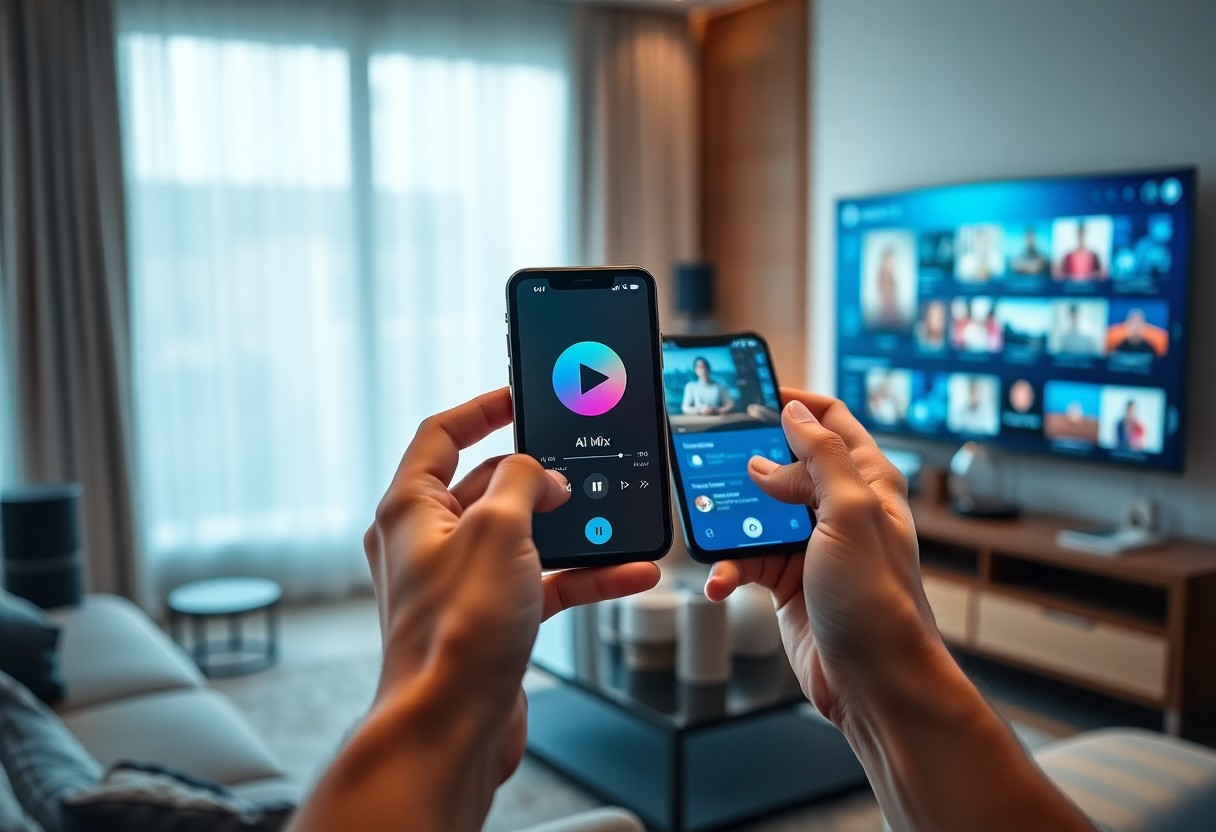
Intelligence is woven into the apps you open every day, shaping your feed, guiding navigation, and powering helpers like voice assistants so your experience feels personalized. You get faster search, automated edits, and smart suggestions that boost efficiency and convenience, but AI also introduces privacy risks and bias that can affect what you see and share. Learning how these systems work helps you use them safely and get more value from your apps.
Key Takeaways:
- AI personalizes your experience by analyzing behavior to power recommendations, search results, and adaptive interfaces.
- AI automates routine tasks-smart replies, scheduling, photo organization, and voice assistants-making apps faster and more productive.
- AI improves app reliability and safety by optimizing performance, detecting fraud or anomalies, and enabling privacy-preserving approaches like on-device inference and federated learning.
What is Artificial Intelligence?
Definition and Explanation
AI builds systems that learn patterns from data so you can automate decisions and predictions; it blends machine learning, deep learning, and rule-based logic. Modern large language models (GPT-3 has 175 billion parameters) transfer learning across tasks, training on massive datasets across thousands of GPUs, then serving predictions in milliseconds to power search, assistants, and personalization on your devices and servers.
Real-world Examples
You encounter AI daily: Gmail’s Smart Reply, Google Photos’ face grouping, Spotify’s Discover Weekly, and Netflix recommendations (which influence roughly 80% of viewing choices and are estimated to save the company $1 billion annually). In mobility, Tesla Autopilot uses neural nets for perception and control, while healthcare models can achieve >90% accuracy on narrow diagnostic tasks.
For depth, Netflix combines matrix factorization, deep neural nets, and rigorous A/B testing on millions of users to lift engagement by a few percentage points-translating into large retention gains. Likewise, developer tools like GitHub Copilot, built on OpenAI models, showed developers accepting about 40% of suggestions in early studies, speeding coding workflows and shifting how you build software.
AI in Communication Apps
Chatbots and Virtual Assistants
When you message a company, AI often handles the first reply. Modern chatbots and virtual assistants like Siri, Alexa, or bank bots can resolve routine issues, offering 24/7 support and handling thousands of queries simultaneously, which can lower support costs by up to 30%. They combine intent classification, slot filling, and context-tracking; for example, Bank of America’s Erica handles millions of customer interactions to surface transactions and alerts. You should watch for privacy and bias risks when bots access personal data.
Language Translation Services
You rely on neural machine translation inside apps like Google Translate, Microsoft Translator, and WhatsApp to turn messages and captions across languages. Google Translate supports over 133 languages, and Google’s switch to NMT cut translation errors by more than 60%. Real-time conversation modes let you talk across languages in near‑real time, while automated subtitles in YouTube and Teams use similar models to make meetings accessible.
Beyond web APIs, translation runs on-device to protect your data: offline packs in Google Translate and Microsoft Translator keep translations local so your texts remain encrypted, reducing latency and data usage. Developers embed services via Google Cloud Translation or Azure Translator to translate UI strings and user content automatically; enterprise deployments often translate millions of strings per month, improving global reach while you must manage privacy and legal compliance for user-generated content.
AI in Social Media
Content Personalization
Platforms use collaborative filtering, embeddings and deep learning to rank billions of posts daily so that you see what engages you most. For example, TikTok (over 1 billion monthly users) and YouTube report recommendation engines drive a large share of watch time, and engineers run hundreds of A/B tests to tweak relevance and latency. Because models infer preferences from your clicks, watch time and dwell rates, real-time personalization boosts engagement while shaping the content loop you experience.
Image and Video Recognition
Computer vision models detect faces, objects and scenes so your feed auto-tags, generates captions and filters unsafe media. Services like Instagram add automatic alt text and YouTube auto-classifies violent or sexual content using CNNs and transformers, often exceeding 90% accuracy on curated benchmarks. Since these systems also power moderation and discovery, they can detect nudity, violent content, and deepfakes, improving safety but risking bias and false positives that change your reach.
State-of-the-art pipelines combine CNNs, Vision Transformers and multimodal models like CLIP to map images and text into shared embeddings, so you can do visual search or auto-captioning instantly. Temporal models analyze motion and audio for deepfake detection, while lightweight on-device models power AR lenses at 30-60 fps with inference under 50 ms. Platforms use these tools to remove policy-violating media faster; CLIP-style embeddings enable powerful visual search and on-device inference keeps your camera data private.
AI in Productivity Tools
Productivity apps now use AI to automate repetitive work and surface the right information when you need it: email triage and smart replies cut inbox time, AI summarizers turn long meetings into action items, and integrations with tools like Zapier or Power Automate let workflows run without manual handoffs. Studies show teams can achieve up to 30% faster task completion, while you should watch for privacy leaks and automation errors that can amplify mistakes if unchecked.
Task Automation
Robotic process automation and ML-driven rules let you wire triggers to actions so invoices, approvals, and data entry happen automatically; for example, accounts-payable automation can reduce processing time by 50-70%. You configure conditions and exceptions, and AI handles the bulk, but you must monitor logs because automation errors can propagate quickly and require rollbacks or human review to fix systemic issues.
Smart Scheduling
AI scheduling assistants remove the back-and-forth by analyzing calendars, time zones, and participant preferences to propose optimal meeting slots-tools like Calendly, Google Calendar and Microsoft Scheduling Assistant claim they eliminate roughly 80% of coordination messages. You’ll save time and avoid conflicts, yet exposing calendar metadata raises a privacy risk that you should control via scopes and permission settings.
Under the hood, smart schedulers infer availability from patterns, enforce buffer times and travel windows, and score slots by attendee priority and past responsiveness; some systems predict no-shows using historical behavior to suggest shorter meetings or automated reminders. You benefit from integrations that auto-create conferencing links and adjust for time zones, while also needing governance because models can introduce bias-prioritizing certain attendees or meeting types unless you tune rules and review logs.
AI in Entertainment
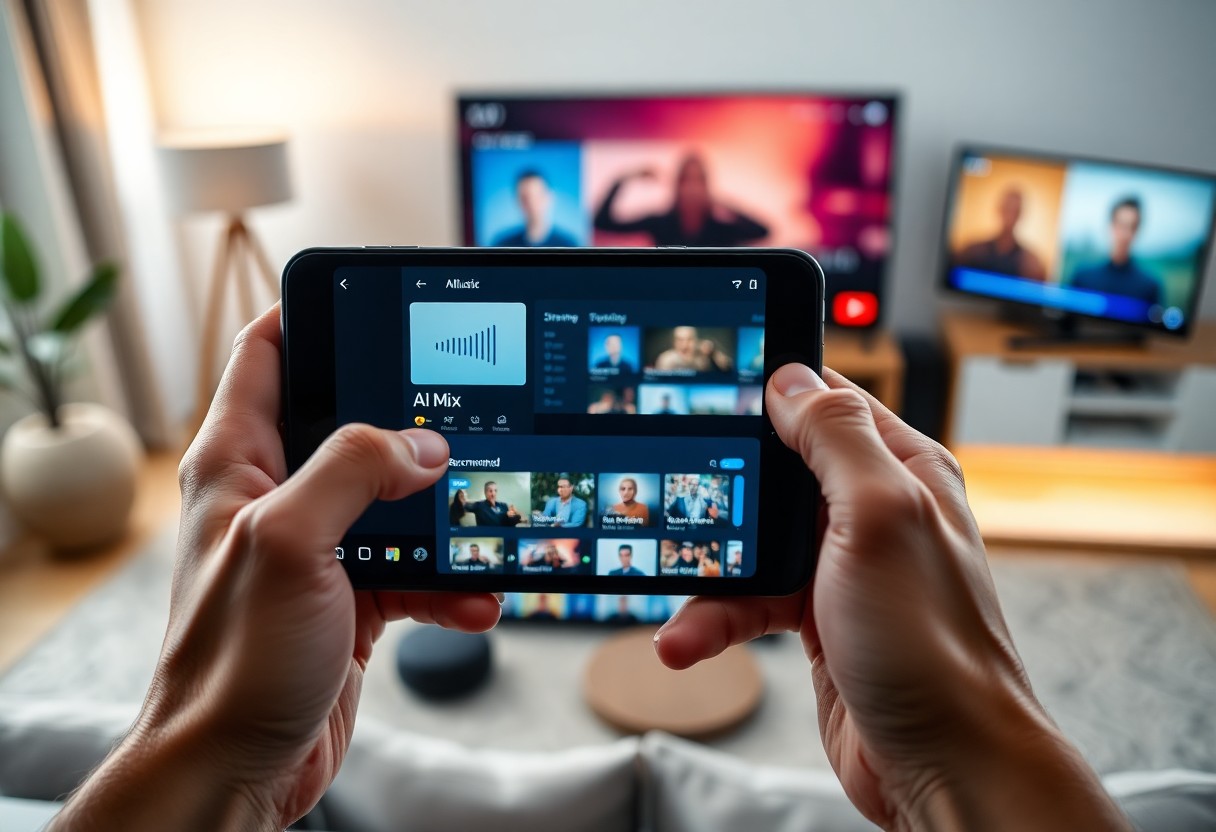
You encounter AI daily in entertainment, from recommendation engines to CGI and synthetic voices; for instance, platforms like Netflix report that about 75% of viewer activity is driven by recommendations. You can read community takes on everyday uses How are people using AI in their everyday lives? I’m curious. At the same time, deepfakes pose a serious risk by enabling realistic misinformation and unauthorized likenesses.
Recommendations on Streaming Services
When you browse, algorithms use collaborative filtering, content-based signals and hybrid models to predict what you’ll watch next; Netflix and Amazon personalize thumbnails, titles and start points to boost engagement, and Spotify’s Discover Weekly serves personalized playlists to tens of millions of users weekly. These systems analyze viewing, skip rates and session length to optimize recommendations, so you often find new favorites without searching, which can increase watch time and retention significantly.
Game Development Enhancements
In game development you benefit from AI-driven procedural generation and animation tools: procedural systems created the 18 quintillion planets in No Man’s Sky, while ML-based animation smoothing and inverse kinematics speed up character work, letting your team prototype worlds faster and iterate on gameplay more efficiently.
Tools like Unity ML-Agents (open-source) and Epic’s MetaHuman Creator let you train NPC behaviors and generate photorealistic characters; studios also use NVIDIA’s DLSS to boost frame rates with AI upscaling. You should note that AI-driven behaviors can be unpredictable, so rigorous testing and guardrails are necessary to avoid gameplay-breaking or biased outcomes.
The Future of AI in Everyday Apps
Emerging Trends
You’ll see on-device inference and federated learning push personalized features into apps without sending raw data to servers (Google’s Gboard applied federated updates since 2019), while foundation models with tens to hundreds of billions of parameters (GPT-series, PaLM) power generative search, summaries, and multimodal assistants. Faster networks (5G) and chips like Apple’s Neural Engine mean real-time, private AI for billions of users, enabling camera-based shopping, instant transcription, and AI-assisted creativity in your everyday apps.
Potential Challenges
You’ll encounter legal, ethical, and security risks as AI scales: GDPR fines can reach €20 million or 4% of global turnover, landmark audits (the Gender Shades study) revealed much higher face-recognition error rates for darker-skinned women, and adversarial attacks or prompt injection can make models behave dangerously or leak sensitive inputs-so privacy breaches, biased outputs, and abuse are real threats to your users.
Mitigation requires concrete steps you can demand in apps: deploy differential privacy and federated updates to limit raw-data exposure (Apple and Google use such techniques), run red-team adversarial testing like OpenAI did for GPT-4, and publish model cards and dataset sheets to track provenance and limitations. You should also prefer smaller, specialized models where possible to cut cost and energy (training large models can cost millions and have substantial carbon footprints), require human review for high-stakes decisions, and align development with emerging rules such as the EU AI Act to reduce regulatory and reputational risk.
Summing up
Summing up, AI quietly enhances the apps you use every day by personalizing recommendations, speeding searches, automating tasks, improving photos and voice assistants, and protecting your data; it learns from your patterns to make interactions smoother, helps you find what matters faster, and frees you to focus on what you want to do.
FAQ
Q: How does AI personalize the apps I use every day?
A: AI analyzes signals such as your interactions, location, device sensors, and content preferences to build a profile that helps rank and surface relevant items. Recommendation models power feeds, playlists, shopping suggestions and search results by predicting what you are most likely to open or enjoy; these models combine collaborative filtering, content-based features, and contextual signals (time of day, recent activity). Many apps run lightweight models on-device for instant personalization while syncing aggregated updates with cloud models to improve accuracy without sending all raw data off the device. The outcome is dynamic content ordering, tailored notifications, and adaptive UI elements that change as your habits and context change.
Q: What AI techniques enable features like voice assistants, smart camera modes, and real-time translation?
A: Deep learning models such as convolutional and transformer networks perform perception tasks: speech-to-text and text-to-speech convert audio; computer vision models detect faces, scenes, and objects for autofocus, portrait mode, and automatic tagging; sequence-to-sequence models handle translation and autocomplete. Low-latency on-device inference and specialized hardware (NPUs, DSPs) let these models run in real time, while cloud services handle heavier processing or larger-context understanding. Engineers use model compression, quantization, and caching to fit advanced capabilities into mobile and web apps, enabling fluid interactions like instantaneous captions, camera suggestions, and conversational assistants.
Q: How do apps protect my privacy and avoid misusing AI-driven data?
A: Developers combine technical and policy measures: on-device processing limits raw-data uploads, federated learning aggregates model updates from many devices without sharing individual data, and differential privacy adds noise to outputs so individual contributions cannot be reconstructed. Apps provide permission controls, activity dashboards, and options to opt out of personalization or delete historical data; regulation and internal review processes address compliance and risk. Responsible AI pipelines also include bias testing, human-in-the-loop review for sensitive decisions, and transparent model cards or explanations so users and auditors can understand how models behave and what data influences outcomes.